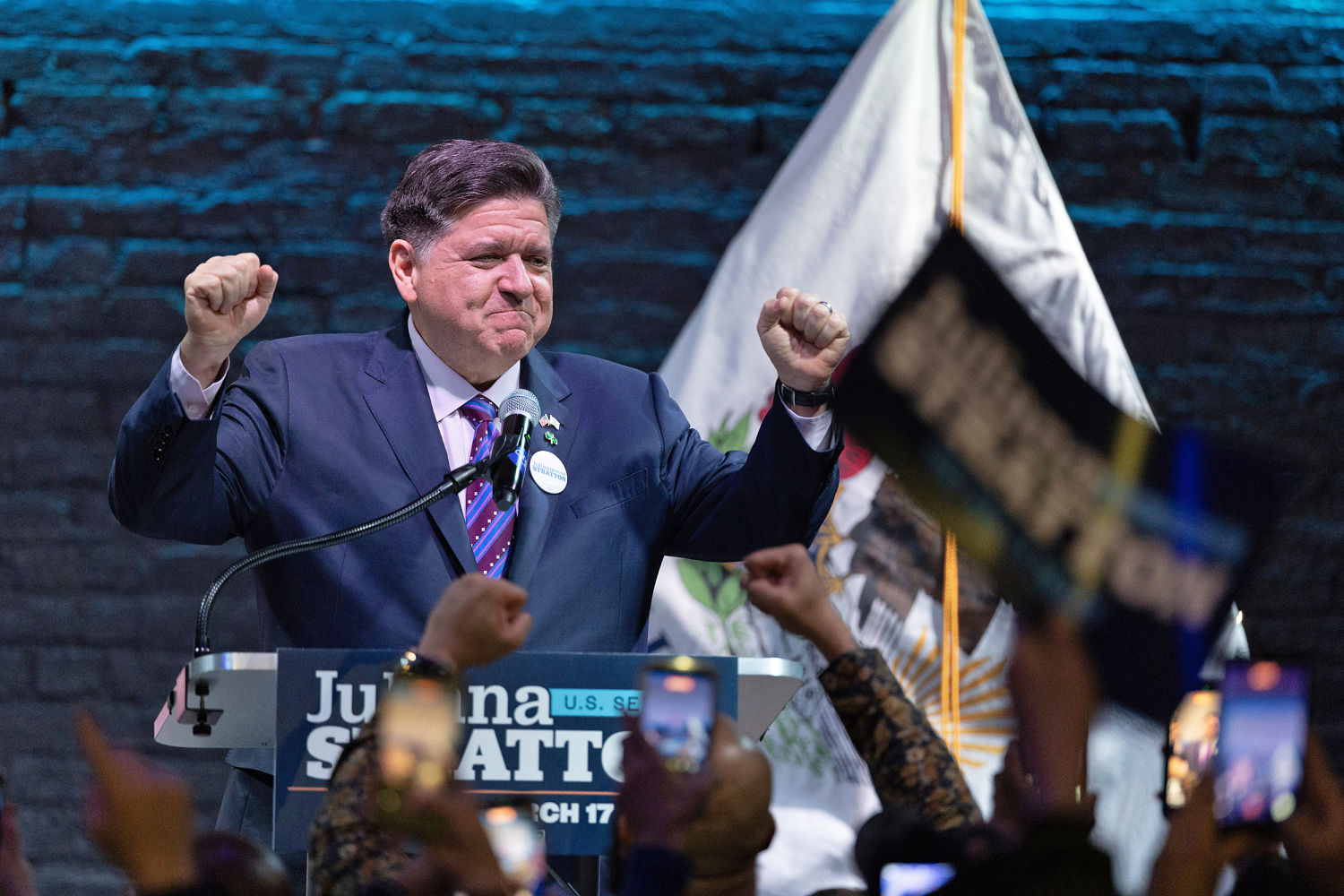
The air in a campaign office during the final stretch of an election doesn't smell like democracy. It smells like stale coffee, ozone from overheating printers, and the distinct, sharp tang of human anxiety. Somewhere in a suburban strip mall in a swing state, a twenty-two-year-old staffer is staring at a spreadsheet that refuses to balance. They need three more canvassers for the Saturday shift. They need a functional printer. Most of all, they need the terrifyingly expensive fuel that keeps the American political engine from seizing up: cash.
This is where the story of power usually ends for most people—at the checkbook. But for JB Pritzker, the Governor of Illinois and heir to the Hyatt Hotel fortune, the checkbook is merely the opening credits.
To understand the sheer scale of the political shadow Pritzker is casting across the national stage, you have to look past the press releases about legislative wins in Springfield. You have to look at the infrastructure of influence. It is a quiet, rhythmic flexing of muscle that happens in rooms where the carpet is thick and the cell phone reception is intentionally spotty.
The Gravity of Gold
Money in politics is often described as a "war chest," a term that evokes clashing swords and medieval valor. The reality is much more clinical. It is physics.
When a person possesses a net worth estimated north of $3.5 billion, they don't just participate in the political system. They warp it. Their presence creates a gravitational pull that draws in consultants, candidates, and operatives from across the country. Pritzker isn't just a governor; he is a portable ecosystem of resources.
Consider a hypothetical candidate running for a state house seat in a place like Wisconsin or Pennsylvania. Let’s call her Sarah. Sarah is a teacher, a mother of two, and she is currently losing her mind because a shadowy Super PAC just dropped $500,000 on a television ad calling her a radical. Sarah doesn't have $500,000. Her party’s state committee is broke. She is, for all intents and purposes, a ghost in the machine.
Then, the Pritzker apparatus moves.
Through his "Think Big America" nonprofit, the Governor doesn't just cut a personal check. He funds the digital infrastructure, the polling, and the ground game that Sarah could never afford on her own. This isn't charity. It is the construction of a debt—not necessarily a financial one, but a debt of loyalty. When the time comes to decide the future of the Democratic Party, Sarah and hundreds like her will remember who kept their lights on when the storm hit.
The Architect of the Mid-West
For decades, the center of gravity for the Democratic Party was a coastal see-saw. You had the intellectual, high-finance energy of New York and the sprawling, celebrity-adjacent donor networks of California. The Midwest was the "flyover" territory—the place where candidates went to take photos in front of tractors before rushing back to a fundraiser in the Hamptons.
Pritzker has systematically dismantled that map.
By anchoring the Democratic National Convention in Chicago, he didn't just host a party. He staged a takeover. He signaled that the path to the White House no longer runs exclusively through a Manhattan penthouse or a Silicon Valley board room. It runs through the I-80 corridor.
There is a specific kind of confidence that comes from being the "Big Man" in a room full of powerful people. It’s not a loud confidence. It’s the stillness of a man who knows he can outspend, outlast, and out-organize almost anyone else on the floor. While other potential presidential hopefuls are busy polishing their Instagram feeds, Pritzker is building a fortress of policy wins—legalized cannabis, protected reproductive rights, and a balanced budget in a state once defined by its fiscal rot.
He is proving that a billionaire can be a populist, a paradox that usually collapses under its own weight. He does it by leaning into the bluntness of his upbringing. He doesn't pretend he isn't rich. Instead, he uses that wealth as a shield for those who have none. Or at least, that is the narrative being carefully woven into the fabric of his public persona.
The Invisible Stakes
Why does this matter to the person sitting at home, far removed from the marbled halls of the Illinois State Capitol?
It matters because we are witnessing the professionalization of the "favorite son." In the past, political machines were built on patronage—jobs for cousins, paving contracts for friends. The Pritzker machine is built on data and ideological alignment. It is cleaner, faster, and infinitely more powerful.
The invisible stakes are the soul of the party itself. If one man can bankroll the defense of abortion rights across multiple states through a single 501(c)(4) organization, he becomes a de facto branch of government. He becomes the "Blue Wall" personified.
But there is a cost to this kind of concentrated power. When the party begins to rely on the largesse of a single titan, it loses the messy, grassroots spontaneity that often drives real change. The energy moves from the streets to the spreadsheets. We trade the unpredictability of a movement for the efficiency of a corporation.
The Man Behind the Money
Wait.
Behind the donor lists and the legislative tallies, there is a human being who has spent a lifetime being underestimated because of his last name. There is a psychological drive here that goes beyond mere ambition. Pritzker isn't just running for a higher office or a better legacy; he is competing against the ghost of what people expect a "rich kid" to be.
He works longer hours than his staffers. He memorizes the names of local precinct captains in towns with populations smaller than his Chicago backyard. He is a man in a hurry, acting as though the clock is ticking on his ability to prove his worth.
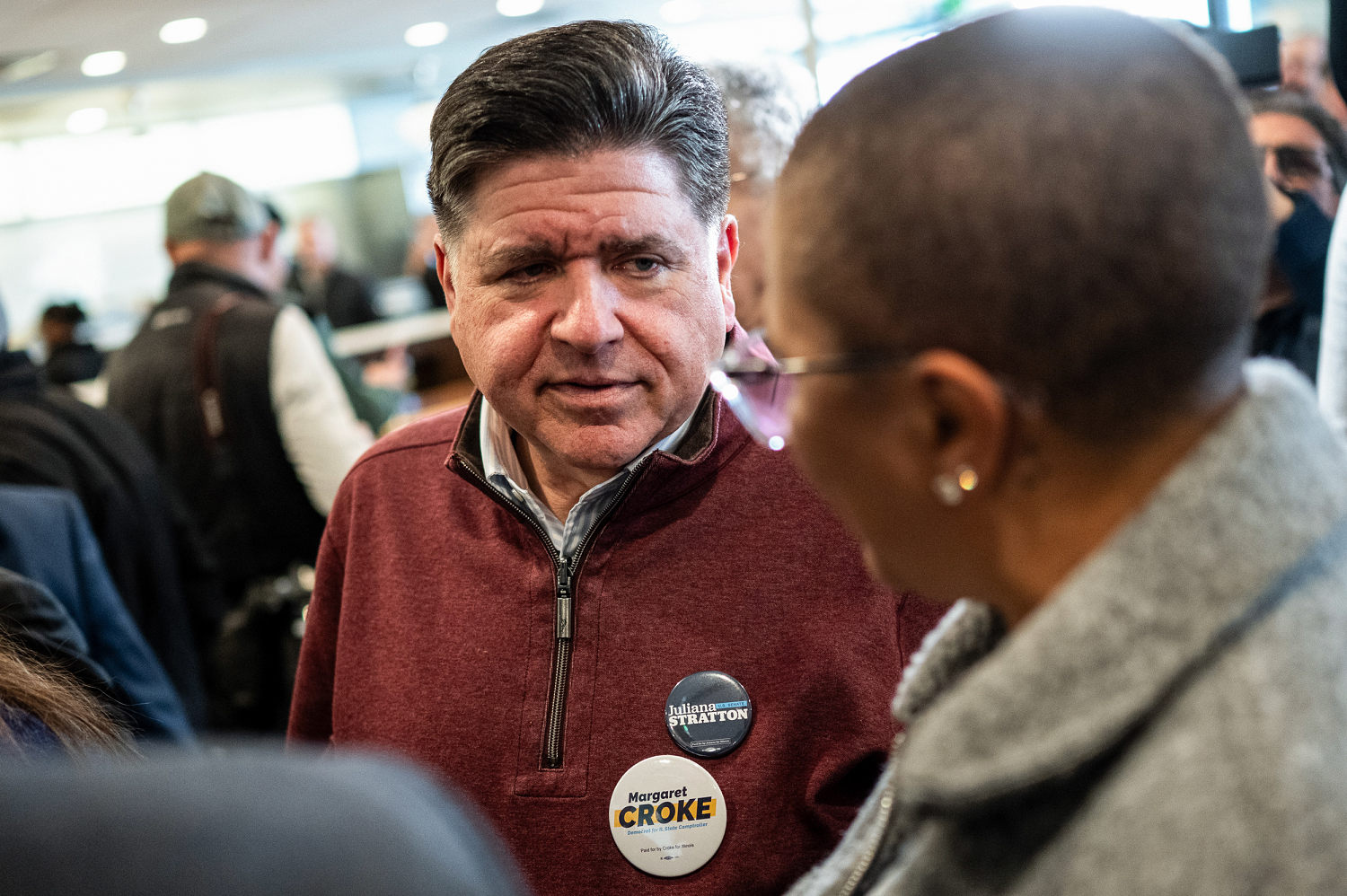
Imagine him in a diner in southern Illinois. The fluorescent lights are humming. The coffee is burnt. He is sitting across from a group of miners or farmers who have every reason to distrust a billionaire from the Gold Coast. He doesn't lead with a policy white paper. He leads with a joke, a self-deprecating comment about his weight or his wealth, and then he listens.
That is the real flex. Not the money. The ability to make the money disappear so the person across the table only sees the man.
The Shift in the Wind
Power is never static. It is a liquid, constantly seeking the lowest point, the path of least resistance.
For years, that power flowed toward the loudest voices. Now, it is flowing toward the most stable ones. In an era of political chaos, Pritzker offers something rare: a boring, reliable, high-functioning machine. He has turned Illinois into a laboratory for what a progressive state can look like when it actually has the cash to pay its bills.
The national stage is looking at Chicago not as a cautionary tale of urban decay, but as a blueprint.
Whether this leads to a desk in the Oval Office or simply a permanent seat at the head of the table is almost irrelevant. The transformation is already complete. The "Politics Desk" can report on the tactical shifts and the polling data all they want, but they are missing the forest for the trees.
The story isn't that a billionaire is playing politics. The story is that the politics of the future are being bought, sold, and branded in the image of a man who realized that in America, you don't just win an argument. You fund the reality you want to live in.
The staffer in the suburban strip mall finally gets their printer fixed. The canvassers show up for the Saturday shift. They don't know the name of the donor who made it happen. They just know that for the first time in a long time, the machine is working.
Deep in the heart of the Midwest, the giant isn't just waking up. He’s already started building the road ahead, and he’s paying for the pavement in cash.
The shadow is growing. And it’s starting to look a lot like a map.