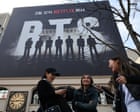
The music industry press is currently drowning in a sea of saccharine praise for BTS's latest release, Arirang. They call it a "homecoming." They call it a "tribute to Korean roots." They are completely missing the point. Arirang isn't a gift to the fans; it is a calculated, cold-blooded execution of the "Idol" identity to make room for something far more clinical: the permanent corporate entity.
For a decade, the narrative has been about the "scrappy underdogs" from Big Hit. That story is dead. By naming an album after the most recognizable folk song in Korean history, HYBE isn't honoring tradition. They are weaponizing nationalism to mask a creative plateau. When a brand—and make no mistake, BTS is now more brand than band—reaches this level of saturation, it stops innovating and starts canonizing itself.
The Myth of the Creative Comeback
The standard industry take is that this "comeback" concert is a victory lap for the members after their mandatory service. That is a lazy interpretation. In reality, the "comeback" is a stress test for a decentralized business model.
I have watched labels burn through hundreds of millions trying to keep a group relevant while the members outgrow the costumes. Usually, the group fades. But HYBE is attempting the "Disney Pivot." They are turning Jin, RM, Suga, J-Hope, Jimin, V, and Jungkook into intellectual property that no longer requires their physical presence to generate revenue.
Arirang is the sonic equivalent of a heritage brand logo. It’s designed to be unassailable. If you criticize the music, you’re not just criticizing a pop song; you’re supposedly "disrespecting the culture." It’s a brilliant, cynical shield.
Why the Folk Influence is a Strategic Retreat
Most critics are fawning over the use of traditional Korean instruments in the lead tracks. They claim it’s a "bold fusion." It’s actually the safest move in the playbook.
When a Western artist runs out of ideas, they make a "back to basics" acoustic album. When a K-pop titan reaches the end of the "Global Pop" trajectory, they retreat into hyper-nationalism. It’s a move designed to shore up the domestic base while offering "exotic authenticity" to the West.
The problem? It’s performative.
- The "Authenticity Trap": Real Arirang is about han—a specific Korean collective feeling of grief and resentment.
- The Corporate Polish: The Arirang on this album has been scrubbed, sanitized, and compressed for Spotify playlists.
- The Result: You lose the soul of the folk tradition and the edge of modern pop. You’re left with a middle-of-the-road product that satisfies stockholders but leaves the art gasping for air.
The ARMY is Now a Marketing Department
We need to stop pretending the relationship between the fandom and the group is purely organic. It was once. Now, it’s a highly efficient, unpaid workforce.
The "People Also Ask" sections on search engines are filled with queries like "How to help BTS break records for Arirang?" The premise of the question is flawed. You shouldn't be helping a multi-billion dollar corporation break records. If the music is good, the records happen.
By framing every release as a "mission" for the fans, the industry has successfully offloaded the cost of marketing onto the consumer. You aren't just buying a CD; you are being recruited into a digital infantry. This isn't community; it’s a subscription model where the currency is your time and labor.
The Logistics of the "Lifer" Fanbase
Let's talk about the concert. The "comeback" show isn't about the music. It’s a logistical masterclass in scarcity.
By limiting the dates and centering it around the Arirang theme, HYBE is creating an environment where the "Fear of Missing Out" (FOMO) overrides any critical assessment of the performance. I’ve seen this happen with legacy acts like The Rolling Stones or U2. The show becomes a "Where were you?" moment rather than an "Is this actually good?" moment.
The Hidden Cost of the Global Pivot
The biggest lie in the competitor's coverage is that BTS is "bridging the gap between East and West."
They aren't bridging it; they are bulldozing it to build a strip mall. To make Arirang palatable for a global audience, the nuances of the Korean lyrical structure are often sacrificed for catchy, English-centric hooks. The "fusion" is one-sided.
If you look at the production credits for Arirang, you’ll see the same assembly line of Western producers who work on every other Top 40 hit.
- Homogenization: The unique "Big Hit sound" of 2016 is gone.
- Algorithm Bait: Tracks are getting shorter, hooks are arriving earlier, and the emotional complexity is being ironed out.
- Visual Overload: The music video budget is being used to distract you from the fact that the melody is a derivative of three other songs you heard last year.
The "Mandatory Service" Narrative is a Smokescreen
Every article mentions the military service as if it’s a hurdle the group overcame. It wasn't a hurdle; it was a godsend for their brand longevity.
It allowed for a "reset." It created a narrative of longing and reunion that is worth billions in marketing capital. Without the hiatus, the group would have hit a fatigue wall two years ago. The "military era" allowed the individual members to explore solo projects that, frankly, varied wildly in quality, but it served to keep the brand in the news cycle every single day.
Arirang is the payoff of that forced scarcity. It’s the "New Coke" strategy applied to humans. Take the product away, give them something different (solo work), and then bring back the "Classic" version with a new label.
Stop Asking if They Are the "Kings of Pop"
The question itself is a distraction. They aren't "Kings of Pop" in the way Michael Jackson was. They are the CEOs of a cultural export.
When you listen to Arirang, ask yourself: Am I listening to an artist express a truth, or am I listening to a board of directors' consensus on what will drive the highest engagement in the third quarter?
The downside to my perspective is obvious: it’s cynical. It ignores the genuine joy millions feel. But joy doesn't exempt a product from scrutiny. If we don't demand more than "culturally significant" wallpaper, that’s all we’re ever going to get.
The Arirang album is a tombstone for the BTS that changed the world. It’s a shiny, expensive, perfectly produced monument to a group that has become too big to fail and, consequently, too big to be interesting.
Stop buying the narrative that this is a "new chapter." It’s just the same book, bound in more expensive leather, sold back to you at a premium because you’ve been told it’s "historic."
The music is no longer the point. The point is the preservation of the machine.
Don't clap because you're supposed to. Listen to the silence between the tracks—that's where the real story is.