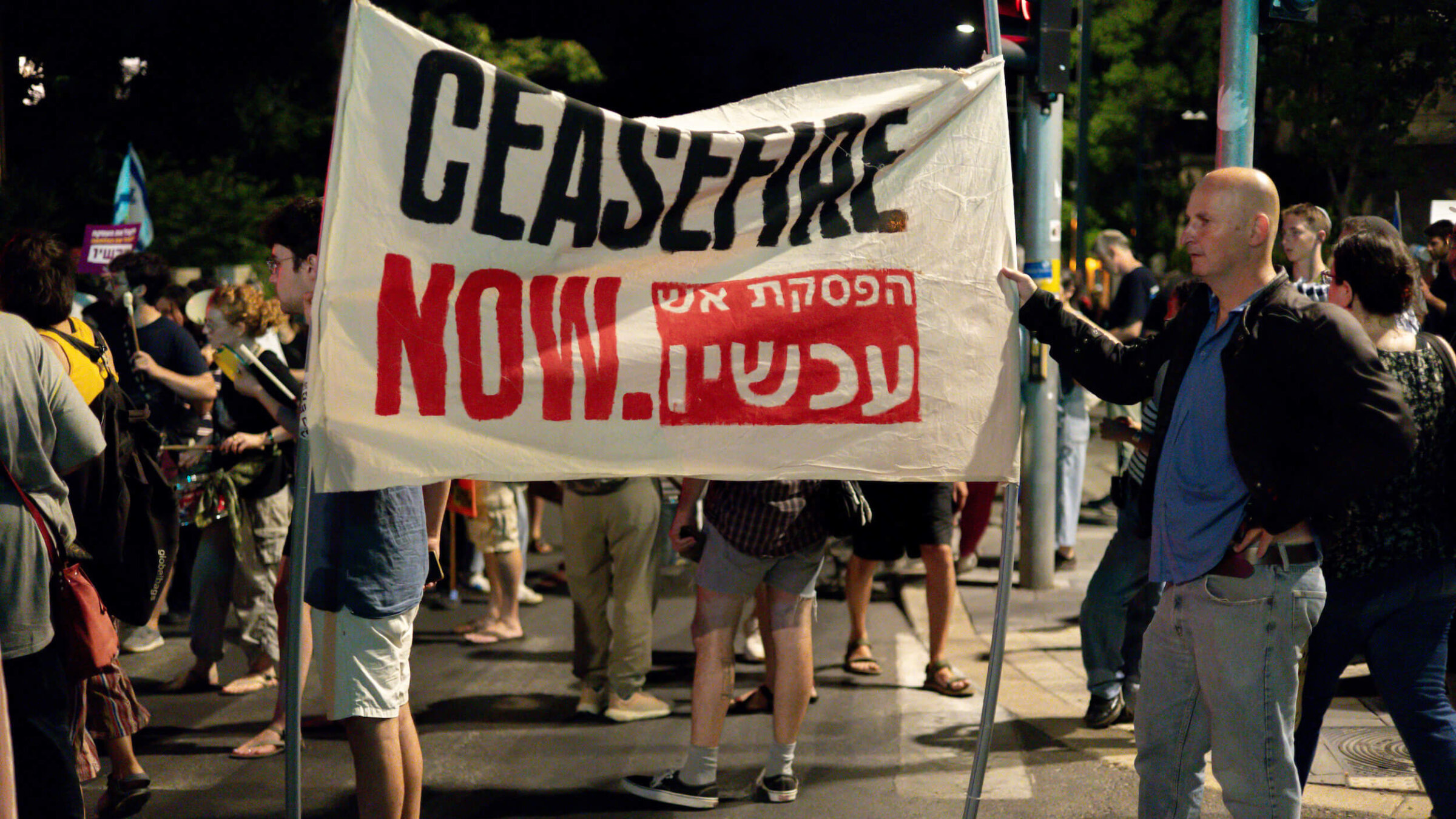
The term ceasefire is the most dangerous narcotic in modern diplomacy. It provides the illusion of progress while the rot deepens. Six months into a "neither war nor peace" status in Gaza, the world remains obsessed with the wrong metrics. Media outlets count calories, truckloads, and hours of electricity. They miss the structural reality: a frozen conflict is not a pause in violence; it is the incubation of the next, more brutal iteration of it.
Stop asking when the "peace" will start. Peace isn't on the menu. The current state isn't a failure of diplomacy—it is a calculated byproduct of it.
The Myth of the Humanitarian Vacuum
Standard reporting suggests Gaza is a hollowed-out shell waiting for a master plan. This is a fundamental misunderstanding of how besieged urban environments function. There is no vacuum. Power flows to the most organized entity capable of enforcing its will at the point of a gun. When international observers scream about "anarchy," they are usually just looking at a form of order they find unpalatable.
I have spent years analyzing how non-state actors thrive in these gray zones. They don't need a formal government. They need a "neither war nor peace" environment to tax the shadow economy. Every aid shipment that enters a zone without a clear, sovereign security apparatus becomes a currency. If you control the queue, you control the people.
The "lazy consensus" claims that more aid is the silver bullet. In reality, pouring resources into a region with undefined political sovereignty without a victor is like pouring water into a cracked bucket. You aren't fixing the bucket; you’re just making the floor wet and slippery for everyone trying to stand on it.
The Geometry of Urban Ruin
Look at the maps. Commentators talk about "reconstruction" as if it’s a matter of cement and rebar. It isn't. It’s a matter of geometry.
In a standard urban environment, streets facilitate flow. In a post-kinetic Gaza, the rubble creates a new, tactical geography. Every collapsed floor slab is a defensive position. Every blocked alleyway is a funnel. When military analysts talk about "six months of ceasefire," they ignore that this time is being used to map the new terrain.
We see this in every modern siege from Grozny to Mosul. The pause doesn't favor the civilian; it favors the defender who is better at blending into the wreckage. The current "stability" is actually a high-speed arms race in subterranean and tactical positioning.
The Sovereignty Trap
The international community is currently obsessed with "The Day After" plans. They want a technocratic solution—a mix of international observers and local administrators. This is a fantasy.
Sovereignty is not granted by a UN resolution or a donor conference. It is seized. The current state of Gaza is a brutal reminder that you cannot outsource security to people who don't want to die for the territory.
- The Scenario: Imagine a coalition of Arab states providing security.
- The Reality: No sovereign nation will risk its professional soldiers to act as a police force in a dense urban environment where the locals view them as occupiers.
By pretending that a neutral, "third-party" administration is coming, we prevent the hard, necessary conversations about who actually holds the keys. This isn't a logistics problem. It's a blood-and-soil problem.
The Economic Illusion of the Gray Zone
We hear about the "total collapse" of the Gaza economy. This is technically true by GDP standards, but the GDP is a useless metric in a war zone. What we are seeing is the birth of a hyper-localized, militant-controlled barter system.
When you freeze a conflict for six months, you don't stop the economy; you move it underground. The "ceasefire" has allowed for the consolidation of black markets that will be nearly impossible to uproot later. This is the "warrior-trader" model. The guy with the keys to the warehouse is the new mayor.
If you want to understand the future of Gaza, stop looking at the UN reports and start looking at the price of a gallon of fuel on the black market. That is the only honest data point available.
The Failure of De-escalation Theory
The prevailing wisdom in Washington and Brussels is that "de-escalation" leads to stability. History suggests the opposite.
Low-intensity conflict—the "neither war nor peace" state—is actually the most unstable configuration possible. It lowers the cost of small-scale provocations while raising the stakes for a final resolution. In a full-scale war, there is a clear objective. In a "ceasefire," the objective is simply to outlast the other side's patience.
This leads to a paradox: the more we strive for a temporary pause, the more we guarantee a permanent crisis. We are subsidizing a stalemate.
The Demographic Time Bomb
Six months of "ceasefire" hasn't just paused the clocks; it has radicalized a generation in a pressure cooker.
When you remove the prospect of a decisive end—one way or the other—you remove hope. People can survive a war if they believe there is a "post-war" coming. They cannot survive an indefinite "pause" where they are trapped in a graveyard of their own history.
The nuance the "peace" activists miss is that a ceasefire without a political path is just a slower, more psychological form of attrition. It erodes the social fabric until the only thing left is the desire for a "final" explosion.
Why the Current Strategy is a Dead End
The insistence on returning to the status quo ante is the ultimate delusion. There is no "back." The Gaza of 2023 is gone. Trying to rebuild it using the same maps and the same political frameworks is an exercise in futility.
The world is currently trying to manage a catastrophe instead of solving a conflict. Management is for businesses. In geopolitics, if you aren't solving, you're just waiting for the next catastrophe to be bigger than the last.
The hard truth nobody wants to admit is that "ceasefires" like this one are often just the preparation phase for a much larger regional conflagration. We are watching the gears turn in real-time, and we’re calling it "peace" because the explosions are slightly quieter this week.
Stop celebrating the silence. It’s not the silence of peace; it’s the silence of a fuse burning in a vacuum.