The Bab el-Mandeb Strait has ceased to be a mere geographic coordinate and has instead become a high-stakes laboratory for asymmetric warfare. While the world focuses on the immediate drama of drone strikes and diverted tankers, the deeper reality is far more grim. We are witnessing the permanent fracturing of the global "just-in-time" supply chain. For decades, the shipping industry operated on the assumption that major maritime arteries would remain neutral and open. That era ended the moment a multi-million-dollar cargo ship was successfully held hostage by a group using off-the-shelf technology.
The math for global trade is no longer adding up. When a vessel bypasses the Suez Canal to avoid the Bab el-Mandeb, it adds roughly 3,500 nautical miles to its journey by rounding the Cape of Good Hope. This isn't just a detour. It is a massive injection of inflation into the global economy, forcing companies to burn through an extra $1 million in fuel per trip while tying up vessel capacity for weeks. The result is a phantom shortage of ships, driving up freight rates even for routes that never touch the Red Sea.
The Illusion of Maritime Security
Western naval powers have spent trillions on carrier strike groups designed for high-end, ship-to-ship combat. They are now finding those assets ill-equipped for the "mosquito fleet" tactics currently dominating the Bab el-Mandeb. It is a classic case of cost imposition. A defender might fire a $2 million interceptor missile to take down a drone that cost $20,000 to assemble. This ratio is unsustainable.
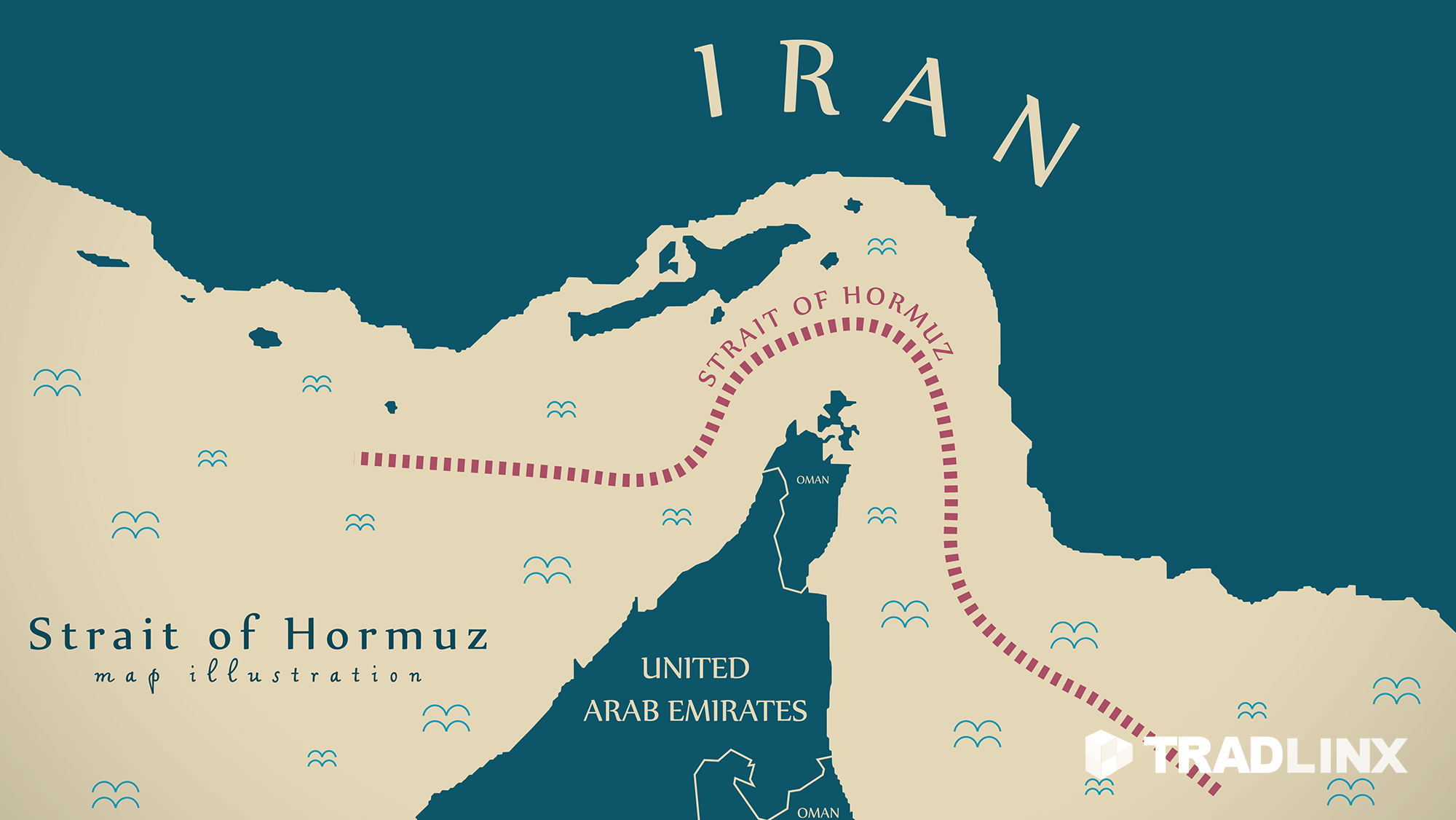
Maritime security is currently a game of whack-a-mole. While Operation Prosperity Guardian and other coalitions attempt to provide a "protective umbrella," they cannot be everywhere at once. The strait is only 18 miles wide at its narrowest point. This proximity to the shoreline means that even primitive ballistic missiles have a high probability of finding a target. The industry’s reliance on the "Hormuz 2.0" comparison is actually a distraction. Unlike the Strait of Hormuz, which is a singular exit for oil, the Bab el-Mandeb is a vital bridge for finished goods moving between Asia and Europe. If Hormuz closes, the world loses energy; if the Bab el-Mandeb closes, the world loses its inventory.
The Insurance Collapse
The most brutal truth of this crisis is found in the ledgers of London’s insurance markets, not on the bridge of a destroyer. War risk premiums for transiting the Red Sea have spiked from 0.07% to over 1% of a vessel's value in a matter of months. On a $100 million container ship, that is an additional $1 million just to pass through a single gateway.
Underwriters are starting to realize that the risk is no longer "random." It is targeted. By analyzing ownership structures and destination ports, regional actors have turned shipping data into a weapon. This has created a two-tier shipping market. There are those willing to run the gauntlet for a massive premium, and those who have effectively abandoned the route, leaving the Suez Canal—a pillar of the Egyptian economy—to wither.
Why Technical Solutions Are Failing
There is a frantic push to deploy electronic warfare and laser-based defense systems on commercial vessels. This is a fantasy. Commercial crews are not trained to operate combat systems, and international maritime law is notoriously murky regarding armed merchant ships. Furthermore, the sheer volume of traffic makes high-tech screening nearly impossible.
- AIS Spoofing: Ships are turning off their Automatic Identification Systems to disappear from digital maps.
- Flag Swapping: Sudden changes in vessel registration to "neutral" nations are becoming common.
- Shadow Fleets: An increasing number of older, poorly maintained ships are being used to carry high-risk cargo, creating a massive environmental ticking time bomb in the event of a strike.
These are not solutions; they are desperate workarounds. They reflect a breakdown in the international order where the sea was once considered a "Global Commons." Now, it is being balkanized.
The Africa Bypass and the New Infrastructure Race
The sudden irrelevance of the Suez Canal has forced a radical rethink of global logistics. The Cape of Good Hope route is now the default for major carriers like Maersk and MSC. This shift is breathing new life into African ports like Durban and Walvis Bay, which are suddenly seeing a surge in bunkering demand. However, these ports lack the infrastructure to handle the massive influx of ultra-large container vessels.
The pivot to Africa isn't just a temporary fix. Boardrooms are now discussing "Friend-shoring" and "Near-shoring" with renewed urgency. If you cannot guarantee that your components will make it through a chokepoint in the Middle East, you stop building your factories in East Asia. The Bab el-Mandeb crisis is the final nail in the coffin for the hyper-globalized model of the early 2000s.
The Cost of the Long Way Around
To understand the scale of the disruption, one must look at the fuel consumption. A standard 14,000 TEU container ship traveling at 18 knots burns roughly 150 tons of fuel per day.
$$Fuel\ Cost = (Days\ of\ Travel \times Tons\ per\ Day) \times Price\ per\ Ton$$
By adding 10 to 14 days to the transit, the carbon footprint of a single pair of sneakers or a laptop increases significantly. This is happening at the exact moment global regulations like the EU’s Emissions Trading System (ETS) are coming into effect. Shipping companies are being hit by a "triple threat": higher fuel costs, higher insurance premiums, and higher carbon taxes for the extra distance.
Beyond the Suez
The focus on the Red Sea ignores the fact that other chokepoints are equally vulnerable. The Panama Canal is struggling with drought, limiting the number of daily transits. The Strait of Malacca is congested and prone to piracy. The Bab el-Mandeb is simply the first domino to fall in a world where geography is being re-weaponized.
The primary takeaway for any business leader is that the "efficiency" of the last twenty years was built on a foundation of geopolitical stability that no longer exists. If your business model requires 100% uptime of the Suez Canal, your business model is broken.
Strategic Resilience or Total Retreat
Companies are now faced with a binary choice. They can invest in massive safety stocks—essentially paying to store months of inventory in warehouses—or they can diversify their manufacturing bases to avoid these maritime traps entirely. The latter is expensive and takes years, but it is the only way to escape the "Chokepoint Trap."
The Bab el-Mandeb is not just a temporary headache for the shipping industry. It is a signal that the cost of moving goods across the ocean is reset to a higher baseline. The era of cheap, fast, and safe maritime trade was an anomaly, not the rule. We are now returning to a world where the sea is a source of friction, and only those with the shortest supply chains will survive.
The next time you see a headline about a ship being targeted in the Red Sea, don't look at the explosion. Look at the rerouted map. That extra line around Africa is the new boundary of the global economy. It is a longer, darker, and much more expensive path that most companies aren't prepared to walk for the long haul.
Audit your Tier 2 and Tier 3 suppliers to identify exactly how many times your components cross a major maritime chokepoint before reaching your assembly line.