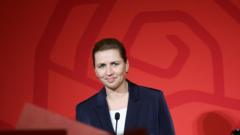
Mette Frederiksen and her Social Democrats just hit a wall. Despite being the largest party in Denmark, the recent election results show a crumbling foundation. They didn't get their majority. Now, they're stuck in a political no-man's land where every deal comes with a high price tag. This isn't just about losing a few seats; it's a fundamental shift in how Danish power works.
The numbers don't lie. You can't lead a country with 27.5% of the vote and expect everyone to just fall in line. The "red block" is fractured. The "blue block" is smelling blood. And in the middle, you have kingmakers who aren't interested in making life easy for the incumbent Prime Minister.
The myth of the stable center
For years, Frederiksen pushed the idea of a "broad government" across the center. She wanted to bridge the gap between left and right. It sounded stable. It sounded pragmatic. But the voters just gave that strategy a thumbs down. By trying to please everyone, the Social Democrats started to stand for nothing.
The Moderates, led by former PM Lars Løkke Rasmussen, hold the keys to the castle. They’re the ultimate wild card. Løkke Rasmussen knows exactly how to squeeze every drop of influence out of a handful of seats. If Frederiksen wants to stay in the top job, she has to give up significant chunks of her policy platform. We're talking about massive concessions on tax reform, healthcare spending, and immigration.
Welfare is the ticking time bomb
Danes love their welfare state. It’s part of the national identity. But the system is cracking under the weight of an aging population and a labor shortage. The Social Democrats promised to protect it. The right-wing parties want to privatize parts of it to save money.
Frederiksen is caught in a trap. If she moves right to satisfy her new potential coalition partners, her core base—the unions and the working class—will revolt. If she stays left, she can't form a government. It's a classic political pincer movement.
The Danish healthcare system is a prime example of this tension. Waiting lists are growing. Nurses are burnt out. The Social Democrats want to throw money at the problem, but money alone isn't fixing the structural rot. The opposition argues for a radical overhaul that includes more private competition. For a Social Democrat, that's a bitter pill to swallow.
Immigration and the rightward drift
Denmark has some of the toughest immigration laws in Europe. Interestingly, the Social Democrats were the ones who moved the party to the right on this issue years ago. They did it to win back voters from the Danish People's Party. It worked for a while.
But now, that strategy has reached its limit. You can't out-right the right forever. New parties like the Denmark Democrats, led by Inger Støjberg, are pulling the conversation even further toward the fringe. Støjberg is a lightning rod. She’s popular, she’s polarizing, and she’s not interested in helping Frederiksen.
This leaves the Social Democrats in a weird spot. They’ve adopted right-wing rhetoric on borders but still try to maintain left-wing credentials on the economy. That cognitive dissonance is starting to show. Voters who want hardline immigration policies are going to the actual right-wing parties. Voters who want traditional socialist values feel betrayed.
The climate change disconnect
Denmark likes to think of itself as a green leader. Wind turbines are everywhere. Bicycles rule the streets of Copenhagen. But when you look at the actual policy negotiations, the "green" transition is often the first thing to get sacrificed for economic stability.
The Green Left and the Red-Green Alliance are furious. They feel the Social Democrats are backsliding on carbon targets to appease industry and middle-class drivers. During these negotiations, expect the climate to be a major sticking point. Frederiksen needs the far-left to pass certain bills, but she needs the center-right to actually form a cabinet. You can't have both.
Why the next few weeks will be chaos
Danish politics is famous for "Queen's rounds"—the formal process where party leaders meet the monarch to suggest who should lead the negotiations. It’s usually a polite affair. This time, it feels like a knife fight in a dark room.
The Social Democrats aren't just fighting the opposition; they're fighting internal exhaustion. Being in power for years takes a toll. Scandals like the "Mink-gate" affair, where millions of minks were culled during the pandemic without proper legal authority, still haunt the Prime Minister. Even if she manages to patch together a majority, it will be a "zombie government"—alive but unable to move with any real purpose.
What this means for the rest of Europe
Watch Denmark closely. It’s often a bellwether for what’s coming to the rest of the EU. The collapse of the traditional "big" parties into a sea of smaller, specialized interest groups is happening everywhere. Germany is dealing with it. France is a mess.
If the Social Democrats fail to build a functional coalition, it signals that the era of the "big tent" party is officially over. We’re moving into an age of hyper-fragmented parliaments where nothing gets done without endless, grueling compromise.
Frederiksen's best-case scenario is a shaky minority government that has to beg for votes on every single piece of legislation. It’s an exhausting way to run a country. It leads to watered-down laws and frustrated citizens.
Tracking the power shifts
To understand where this goes, you have to watch three specific people.
- Lars Løkke Rasmussen: The kingmaker. He wants a centrist government that ignores the wings. He's the most experienced tactician in the room.
- Inger Støjberg: The protest voice. She represents the "Jutland against Copenhagen" sentiment. She won't join a government, but she can break one.
- Mette Frederiksen: The survivor. She’s proven she can be ruthless. The question is whether she has any chips left to play.
The reality is that Denmark is more divided than it looks on a postcard. The urban-rural divide is growing. The generational gap over climate and welfare is widening. A few seats in the Folketing won't fix those deep-seated issues.
If you're following this, stop looking at the top-line seat counts. Start looking at the policy trade-offs. Watch for news about the "CO2 tax on agriculture." That’s the real battlefield. If Frederiksen gives in on that to please the center-right, she loses her left flank. If she doesn't, she doesn't have a government.
Check the official Folketing website for the daily updates on the mandate counts as parties shift their allegiances. The negotiations are happening behind closed doors, but the leaks usually start around 4:00 PM local time. Pay attention to which party leaders are walking out of the meetings smiling and which ones look like they’ve seen a ghost. The body language in the halls of Christiansborg tells the story better than any official press release ever could.
Follow the Danish Ministry of Finance's upcoming reports on the "2030 Plan." This document will be the blueprint for any new coalition. If the numbers in that plan start shifting toward tax cuts, you know the Social Democrats have surrendered. If the spending on healthcare stays high, they might have won a temporary reprieve. Don't expect a quick resolution. This is going to be a long, painful process that leaves everyone slightly unhappy. That's the Danish way, but this time, the stakes feel a lot higher.


