The collapse of Cuban trade under the weight of intensified U.S. sanctions is not an accidental byproduct of diplomatic friction; it is the calculated result of a multi-vector economic isolation strategy. While generalist reporting focuses on the visual signs of scarcity in Havana, a rigorous analysis reveals a more systemic disintegration. The current administration's "Maximum Pressure" campaign functions as a high-precision kinetic tool against the Communist Party’s financial infrastructure, specifically targeting the dual-currency system, military-run conglomerates, and the logistics of state-sponsored energy subsidies.
The Mechanics of Financial Asphyxiation
The primary mechanism of trade collapse is the systematic elimination of "correspondent banking" pathways. When the U.S. Treasury Department designates Cuban entities—specifically those under the umbrella of Grupo de Administración Empresarial S.A. (GAESA)—it creates a radioactive environment for international finance.
- Transaction Friction and Risk Premiums: Even non-U.S. banks now apply a "Cuba Discount" to any potential transaction. This is not a literal discount on price but a massive hike in processing fees and compliance costs to offset the risk of secondary sanctions.
- De-dollarization Failure: Attempts by the Cuban leadership to pivot to the Euro or the Yuan for international settlements have failed to gain traction because the underlying global maritime insurance and shipping industries remain inextricably linked to U.S. dollar-clearing institutions.
- Remittance Interdiction: By targeting the digital rails through which the Cuban diaspora sends funds—specifically by banning entities like Fincimex—the U.S. has severed the state’s primary source of liquid hard currency.
This creates a liquidity trap. Without hard currency, the Cuban state cannot issue Letters of Credit (LCs). Without LCs, international suppliers of essential goods—wheat, fuel, and medical precursors—refuse to ship. The resulting "trade collapse" is therefore a secondary symptom of a primary cardiac arrest in the nation's banking sector.
The Breakdown of the Energy-for-Doctors Exchange
For two decades, Cuba’s trade stability relied on a specialized barter mechanism: the export of medical services in exchange for subsidized Venezuelan crude oil. This "Service-Commodity Loop" has reached a point of structural failure.
The decay of PDVSA (Petróleos de Venezuela, S.A.) infrastructure, coupled with U.S. sanctions on shipping companies transporting Venezuelan oil to Cuba, has forced the Cuban government to purchase fuel on the open market at spot prices. Because the Cuban peso (CUP) lacks international convertibility, these purchases must be made in Hard Currency (MLC).
The cost function of this failure is exponential. As fuel supplies dwindle, the internal logistics chain breaks. Food rots in the fields of Artemisa because there is no diesel for transport; industrial output in Matanzas halts due to grid instability. We are observing a feedback loop where a lack of trade leads to a lack of energy, which in turn destroys the domestic productivity required to generate future trade exports.
The GAESA Bottleneck and Institutional Distrust
A critical error in standard reporting is treating the Cuban economy as a monolithic state entity. In reality, the economy is bifurcated between the civilian ministries and the military-controlled GAESA.
GAESA controls the most lucrative sectors: tourism, retail in hard currency, and port logistics. U.S. strategy has pivoted from broad-based embargoes to "entity-specific" targeting. By placing GAESA-owned hotels and stores on the Restricted List, the U.S. forces a decoupling of the global tourism industry from the Cuban military’s balance sheet.
This creates an internal friction point. The civilian state, which manages public health and education, is starved of resources, while the military-industrial complex attempts to hoard remaining hard currency reserves to maintain its own internal stability. This resource competition signals to foreign investors that the Cuban legal framework is no longer a reliable guarantor of contract law, as the state will prioritize regime survival over debt repayment to external creditors like the Paris Club.
Logistical Erosion and the Deadweight Loss of Sanctions
Trade is not merely the exchange of goods; it is the maintenance of physical assets. The escalation of pressure has triggered a "Long-term Capital Impairment" within Cuba’s infrastructure.
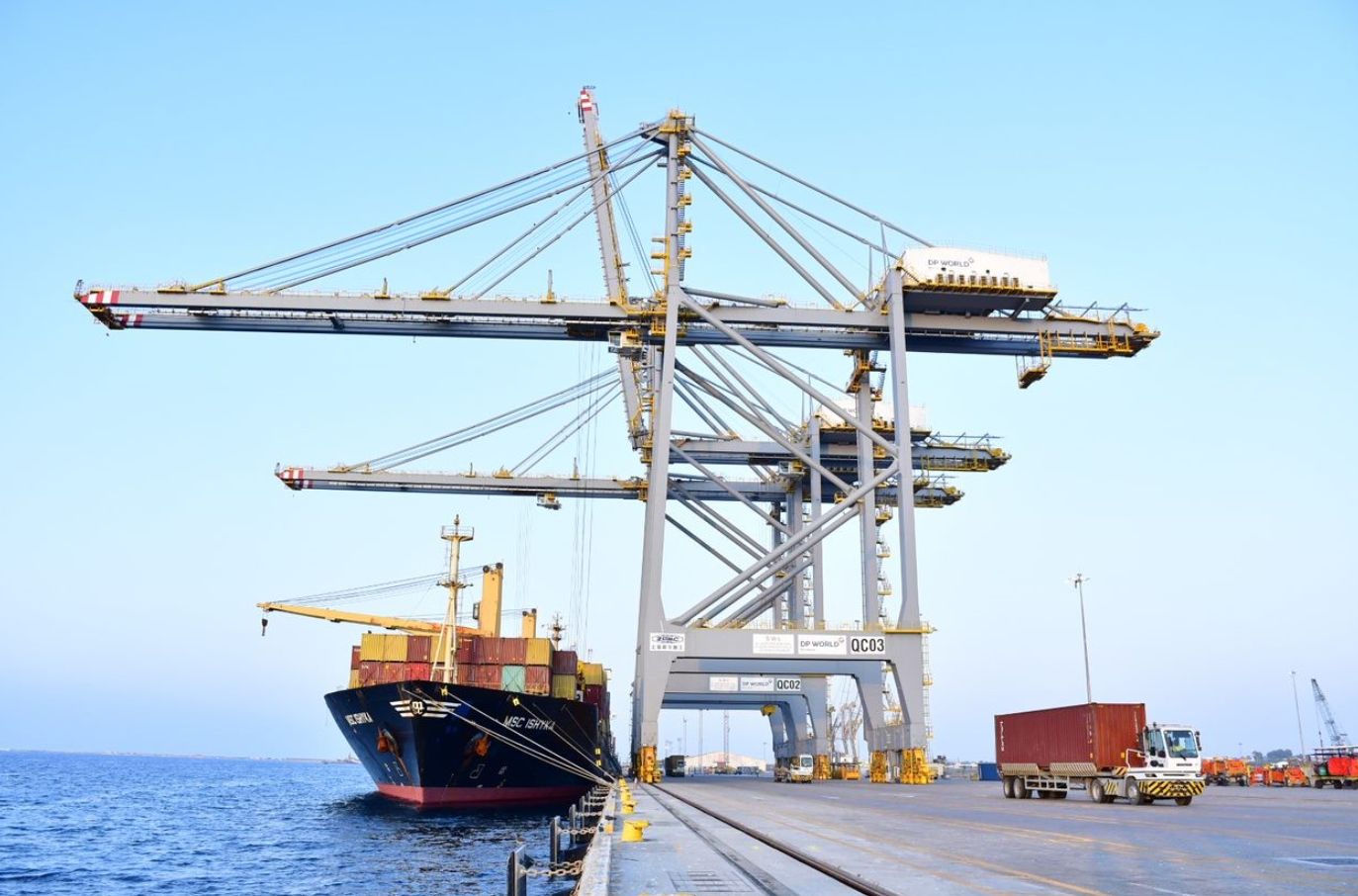
- Dredging and Port Maintenance: Major ports like Mariel require constant capital expenditure for dredging and equipment repair. Without access to specialized Caterpillar or Liebherr parts (due to de minimis rules where products with >10% U.S. content are banned), the efficiency of Cuban ports has plummeted.
- Container Imbalance: Shipping lines are increasingly hesitant to send containers to Cuba because there are no return exports. This leads to an "Empty Container Surcharge," effectively a tax on every import that the Cuban consumer must ultimately bear.
- The "Small Ship" Penalty: To avoid U.S. sanctions, Cuba is often forced to use smaller, older vessels owned by shell companies. These ships lack the economies of scale found in Panamax-class vessels, leading to significantly higher per-unit freight costs compared to neighboring Caribbean nations.
The Myth of Non-U.S. Substitution
A common hypothesis suggests that China or Russia will simply fill the vacuum left by the collapse of U.S.-adjacent trade. Data-driven analysis refutes this as a total solution. While Russia has provided sporadic fuel shipments and China has invested in telecommunications, neither power is willing to provide the massive, unsecured credit lines Cuba requires.
Both Beijing and Moscow have shifted to a "Cash-and-Carry" or "Resource-Collateralized" model. Since Cuba’s nickel production is stagnant and its sugar industry has effectively collapsed to 19th-century production levels, the country lacks the collateral to secure meaningful strategic investment from its allies. The "Communist Solidarity" of the 20th century has been replaced by the "Geopolitical Realism" of the 21st, leaving Cuba in a state of terminal insolvency.
Currency Unification and the Inflationary Spiral
In a desperate attempt to streamline trade, the Cuban government executed the "Tarea Ordenamiento" (Task of Ordering) to eliminate the CUC (convertible peso) and unify the currency. This was a textbook case of a "Liquidity Shock" applied to a supply-constrained economy.
By devaluing the currency without having the foreign exchange reserves to defend it, the government triggered hyperinflation. For an import-dependent nation, a collapsing currency makes trade not just difficult, but mathematically impossible for the average state enterprise. When the black-market rate for the USD is 15x the official state rate, the pricing signals for international trade become entirely decoupled from reality.
Strategic Trajectory for Market Participants
Any entity attempting to navigate this environment must recognize that the "Trade Collapse" is a permanent state of affairs until a fundamental restructuring of the Cuban political-economic model occurs. The current U.S. policy is designed to prevent a "Vietnam-style" economic opening where the ruling party maintains control while liberalizing markets. Instead, it seeks a total structural break.
For the limited set of actors still operating in the region, the following variables dictate the remaining slivers of viability:
- OFAC License Primacy: Business is only possible through highly specific OFAC (Office of Foreign Assets Control) licenses, primarily in agricultural and medical humanitarian tranches.
- Third-Party Escrow: No trade should be conducted on credit. Settlement must occur through third-party escrow accounts in jurisdictions like Panama or Spain, though even these are under increasing scrutiny.
- Supply Chain Redundancy: Expect a 30% to 50% failure rate in logistics. If a part is critical, it must be sourced with a three-fold redundancy plan, accounting for the high probability of vessel seizure or insurance cancellation.
The endgame of this escalation is a state of "Autarkic Decay." Cuba is being forced into a closed-loop system where it can only consume what it produces—and currently, it produces very little. The collapse of trade is not a hurdle to be overcome; it is the new baseline of the Cuban reality.
Maximize focus on the private sector (MIPYMES) as the only remaining channel for micro-trade. While the state-to-state trade has evaporated, these small, private enterprises represent the only segment with the agility to bypass the GAESA-targeted sanctions by utilizing non-state-linked financial channels. However, even this path is narrow and subject to the whims of both the Cuban regulators and U.S. compliance officers.
Would you like me to analyze the specific impact of the Helms-Burton Act Title III on European investment into Cuban tourism?