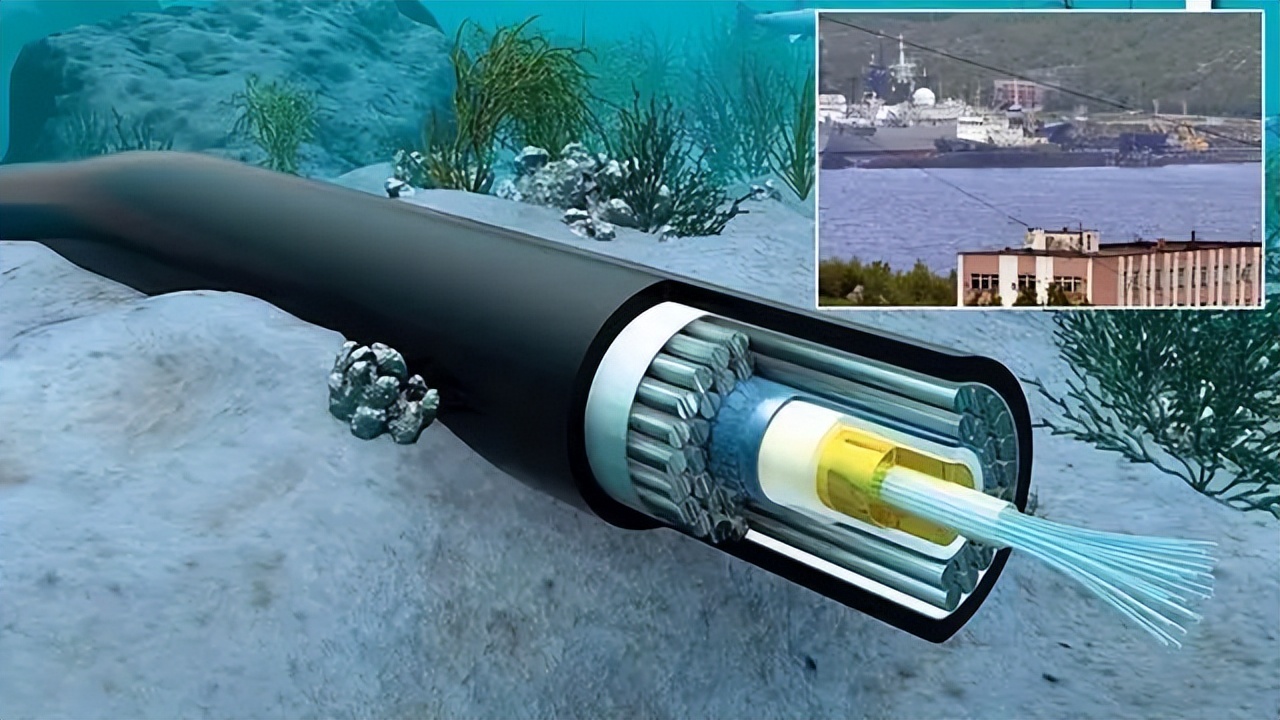
The headlines are predictable. They read like a Cold War fever dream. The UK Ministry of Defence releases a polished statement about deploying warships to "deter" Russian submarines from "attacking" undersea fiber-optic cables. The public is told that our entire digital existence—from bank transfers to TikTok—is one Russian wire-cutter away from a dark age.
It is a lie. Not a lie of facts, but a lie of framing.
The idea that the Royal Navy—or any NATO surface fleet—can "protect" 1.3 million kilometers of undersea cable by shadowing a few Russian vessels is a comforting fairy tale told to justify bloated naval budgets and mask a terrifying reality: the infrastructure is already broken, and the threat isn't a submarine. It’s a fishing trawler and a lack of imagination.
The Geography of Geopolitics is Dead
Traditional naval strategy relies on the concept of "choke points." If you control the Strait of Gibraltar or the Suez Canal, you control the flow of trade. The Ministry of Defence (MoD) tries to apply this 19th-century logic to the seabed. They want you to believe that by putting a Type 23 frigate over a specific patch of the North Atlantic, they are "securing" the network.
They aren't.
Undersea cables are not a single pipeline. They are a mesh. The global internet is built on the Transmission Control Protocol/Internet Protocol (TCP/IP), which was specifically designed to survive a nuclear strike by rerouting data dynamically. If a Russian submarine severs the Atlantic Crossing-1 cable, your data doesn't die. It just hops onto Havfrue or MAREA.
To actually "black out" the UK, an adversary would need to coordinate the simultaneous destruction of dozens of cables spread across thousands of miles of ocean. That isn't a "gray zone" provocation; that is a full-scale declaration of World War III. If we are at that point, your inability to check your Gmail is the least of your problems.
The Myth of the Russian Wire-Cutter
The "competitor" narrative focuses on the Yantar, a Russian research vessel equipped with deep-sea submersibles. The fear-mongering suggests the Yantar is out there like a Bond villain, looking for a "master switch" on the ocean floor.
I have spent years looking at the telemetry of subsea cable faults. Do you know what actually breaks cables?
- Anchors: Bored merchant sailors dropping a hook in the wrong place.
- Trawlers: Bottom-fishing nets that snag and snap fiber lines.
- Sharks: Yes, they occasionally bite the cables, though we’ve mostly fixed that with better shielding.
- Tectonic shifts: Underwater landslides do more damage in ten seconds than a Russian fleet could do in a month.
Around 150 to 200 cable faults happen every year. The reason you never notice them is that the industry has built-in redundancy that far outstrips the defensive capabilities of any navy. When a cable breaks, a repair ship—usually a private, commercial vessel, not a warship—goes out, fishes up the ends, and splices them back together.
The military isn't "deterring" an attack on the internet; they are posturing against a scenario that the private sector has already solved with math and redundancy.
The Real Threat is Tapping, Not Cutting
If the Russians are hovering over a cable, they aren't trying to break it. Why would you destroy a source of intelligence?
The true "insider" fear—the one the MoD won't talk about because they do it too—is signal interception. But here is the nuance the news reports miss: you don't tap a cable in the middle of the Atlantic at a depth of 3,000 meters. The pressure is too high, the light is non-existent, and the technical challenge of splicing into a live fiber-optic line without causing a noticeable power drop is astronomical.
You tap a cable at the Landing Station.
These are the vulnerable, nondescript buildings on the coasts of Cornwall or Long Island where the cables come ashore. These stations are often protected by little more than a chain-link fence and a bored security guard. If an adversary wanted to cripple or spy on our infrastructure, they wouldn't send a billion-dollar submarine to the bottom of the ocean. They would send three guys in a van to a beach in Bude.
The Naval Budget Trap
Why the theatrics then? Why deploy the HMS Richmond to shadow a Russian ship?
Follow the money. The Royal Navy is currently struggling to justify its existence in an era of long-range hypersonic missiles and drone swarms. By framing undersea cables as a "existential defense priority," the Navy secures funding for "Multi-Role Ocean Surveillance" ships.
It is a classic "solution in search of a problem." We are spending millions in taxpayer money to have warships play cat-and-mouse with Russian vessels, while the actual vulnerabilities of the network—software exploits in the Border Gateway Protocol (BGP) and the physical insecurity of landing stations—remain unaddressed.
Why "Protection" is a Statistical Impossibility
Let's look at the math. The UK's Exclusive Economic Zone (EEZ) is vast. The North Sea alone is a maze of power cables, gas pipes, and data lines.
Imagine a scenario where a Russian "research" vessel is moving at 12 knots. To effectively monitor that vessel and ensure it isn't deploying a quiet, autonomous underwater vehicle (AUV) to plant an explosive, you need constant, 1:1 shadowing.
We don't have enough hulls. Not even close.
By pretending we can protect the cables, the government creates a false sense of security. It discourages the private sector from investing in further redundancy. If the "state" is handling defense, why should a private consortium spend an extra $300 million on a more circuitous route?
This is Moral Hazard applied to national infrastructure. We are trading actual resilience for the appearance of protection.
The BGP Hijack: The Attack You Can't See
If Russia wants to "attack" our cables, they don't need a submarine. They can do it from a keyboard in St. Petersburg using a BGP hijack.
BGP is the "routing map" of the internet. It relies entirely on trust. If a Russian state-owned ISP tells the world, "Hey, all traffic destined for London should actually come through our servers first," the internet will often believe them. We’ve seen this happen. Traffic for European banks has been "accidentally" routed through Moscow for hours at a time.
This achieves everything a cable cut does—interception, disruption, and chaos—with zero physical risk and 100% deniability. Yet, there are no warships deployed against BGP hijacks. There are no "hero" shots of sailors looking through binoculars at a line of code.
Stop Watching the Horizon; Watch the Code
The "lazy consensus" says we need more ships to guard the lines. The reality is we need more Dark Fiber.
We need to stop thinking about "protecting" cables and start thinking about "surviving" their loss. This means:
- Decentralizing Landing Stations: We currently funnel too much traffic through too few points.
- Mandatory Encryption at the Physical Layer: Assuming every cable is already tapped and making the data useless to the listener.
- Space-Based Backups: Low Earth Orbit (LEO) satellite constellations like Starlink are the true "deterrent." They provide a secondary path that doesn't rely on the seabed at all.
The Ministry of Defence is fighting the last war. They are treating a 21st-century distributed network like a 19th-century telegraph line. The Russians know this. They enjoy the theater. Every time a British frigate burns tons of fuel to follow a Russian tugboat, the Kremlin wins a small war of attrition.
They are making us move our expensive pieces across the board to guard a square that doesn't even matter.
The internet is not a wire under the water. The internet is an idea. You can't cut an idea with a submarine, and you certainly can't defend it with a frigate.
Stop falling for the spectacle. The cables will break. They will be tapped. The question isn't whether we can stop the Russians from being near them; the question is why our network is so fragile that we're terrified of a single ship in the middle of the ocean.
Build more paths. Encrypt every byte. Let the Yantar sail until it runs out of diesel.
The ocean is too big to guard, and the internet is too smart to care.