The sea is never as quiet as it looks from a distance. If you stand on the deck of a VLCC—a Very Large Crude Carrier—slicing through the Strait of Hormuz, you feel the vibration of two million barrels of oil beneath your feet. It is a rhythmic, industrial heartbeat. This narrow neck of water, barely twenty-one miles wide at its tightest squeeze, is the jugular vein of the global economy. One wrong move here doesn't just sink a ship; it shuts down factories in Ohio, spikes gas prices in Berlin, and rattles the halls of power in New Delhi.
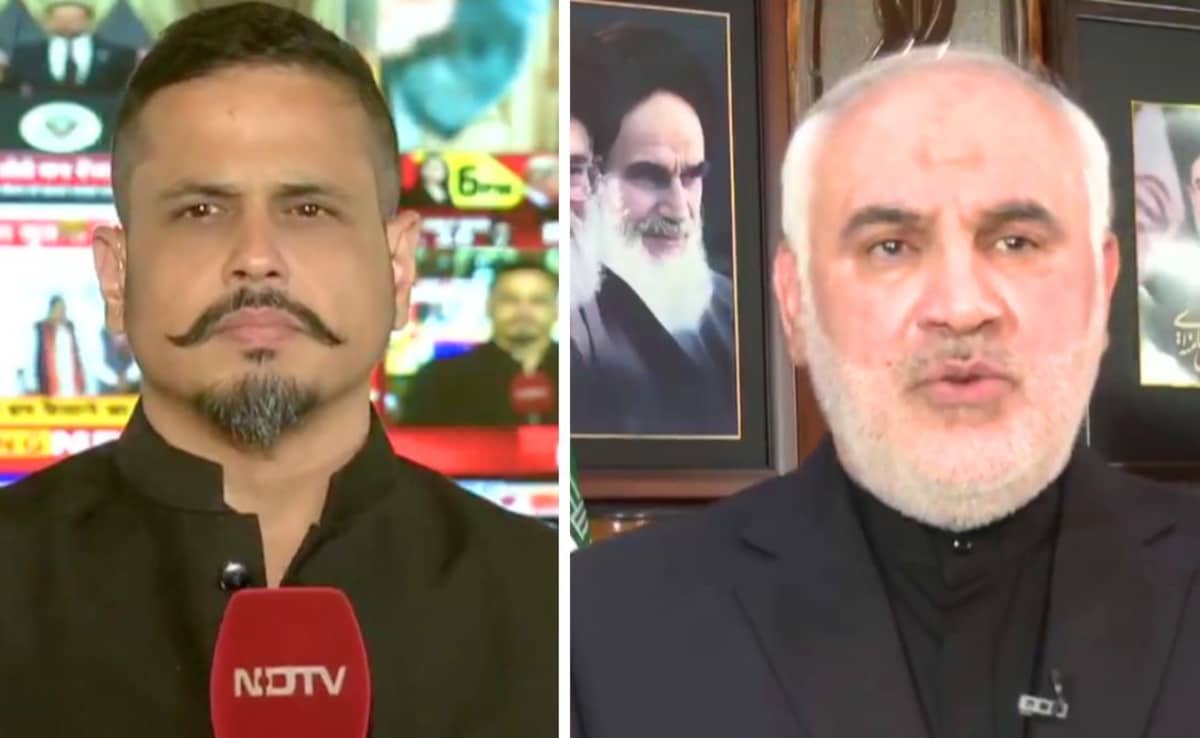
Iraj Elahi, Iran’s Ambassador to India, knows this vibration better than most. When he speaks of the "miscalculations" made by the West, he isn't just talking about diplomatic theory. He is talking about the physical reality of the water. To him, the Strait isn't a neutral highway. It is a door. And right now, the hand on the doorknob is Tehran’s.
The Mirage of Deterrence
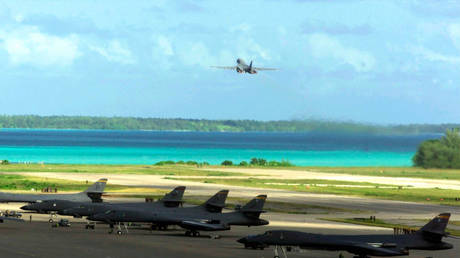
Western strategy has long operated on a single, unwavering assumption: if you put enough steel in the water, the door stays open. The United States and its allies have spent decades patrolling these waves, convinced that the sheer presence of a carrier strike group acts as a universal solvent for geopolitical tension.
But Elahi suggests the West has read the room entirely wrong.
Consider the "miscalculation" he highlights. While the U.S. focused on traditional naval dominance, the regional pulse shifted. Iran viewed the arrival of foreign warships not as a stabilizing force, but as an intrusion that forced their hand. In the eyes of the Iranian envoy, the West overestimated the power of intimidation and underestimated the local resolve to control their own backyard.
Think of it like a neighborhood watch that forgot to ask the neighbors for permission. Eventually, the neighbors change the locks.
A Bridge of Oil to India
For India, the stakes are not academic. They are existential.
India’s growth is a hungry beast. It requires a constant, uninterrupted flow of energy to power its cities and fuel its ambitions. When Elahi sits across from Indian officials, the subtext is clear: India is a friend, and friends deserve a clear path. The Ambassador was explicit in his reassurance to New Delhi. Despite the friction with the U.S., the Strait remains "open" for Indian interests.
This isn't just a gesture of goodwill. It is a masterclass in strategic decoupling. By distinguishing between the "miscalculating" West and a pragmatically neutral India, Iran is attempting to carve out a new map of the world. It’s a map where the old superpowers are the problem, and the emerging ones are the solution.
The narrative being spun here is one of local stewardship. Iran wants to be seen as the responsible guardian of the gate, provided you don't try to kick the door down. Elahi’s message to India is effectively a promise: Your lights will stay on, provided you don't follow the path of those who seek to side-line us.
The Human Weight of a Policy Error
What does a "miscalculation" actually look like on the ground?
Imagine a logistics manager in Mumbai. Let's call him Arjun. Arjun doesn't care about the intricacies of the Joint Comprehensive Plan of Action (JCPOA) or the nuances of maritime law. He cares about the thirty tankers currently scheduled to arrive at the Jamnagar refinery. If the Strait closes, even for forty-eight hours, Arjun’s world collapses. The ripple effect hits the trucker waiting for diesel, the family paying more for a liter of milk, and the factory owner forced to cut shifts.
When the U.S. miscalculates, Arjun is the one who pays the bill.
Elahi’s critique is that the West treats the Persian Gulf like a game of Risk, moving plastic pieces across a board. They ignore the human geography. They ignore the fact that for the people living on the rim of that Gulf, the water is life, not just a strategic asset. By ignoring the local dynamics and pushing for "outside" security solutions, the U.S. has, in Iran's view, created the very instability it claimed to be preventing.
The Red Sea Mirror
The tension in the Strait of Hormuz doesn't exist in a vacuum. It is mirrored, darkly, in the Red Sea. The envoy’s comments come at a time when the Houthi movement in Yemen has turned the Bab el-Mandeb Strait into a gauntlet.
The West sees a series of disconnected fires. Iran sees a single, coherent flame.
The Envoy’s logic suggests that the "miscalculation" is a failure to see the connectivity of the region. You cannot squeeze one end of the Middle East and expect the other end to remain calm. It is a pressurized system. When the U.S. increased its presence and pressure on Iran, the pressure didn't dissipate. It leaked out through proxies, through asymmetric threats, and through the quiet, chilling reminder that the world’s most important trade route is effectively a hallway in Iran’s house.
The Language of the Envoy
There is a specific kind of politesse in Elahi’s delivery. It is the language of a man who knows he holds a royal flush but is willing to let you stay in the game if you play by his rules.
He speaks of "miscalculations" rather than "crimes." He speaks of "openness" rather than "threats." This is intentional. It’s designed to sound like common sense. It’s designed to make the Western position look irrational, bulky, and outdated.
But beneath the diplomatic phrasing is a hard truth. The era of the U.S. acting as the unquestioned sheriff of the high seas is facing its most rigorous test. The "miscalculation" isn't just about a specific policy; it’s about the West failing to realize that the world has learned how to say "no" in ways that don't involve a direct confrontation.
Instead of a war, you get a "maritime incident." Instead of a blockade, you get "security inspections." Instead of a closed door, you get a door that only opens for those who have the right key.
The Indian Tightrope
New Delhi now finds itself in a familiar, albeit exhausting, position: the middle.
India has a "Strategic Partnership" with the United States. It also has a multi-century history with Persia. It needs American technology and investment, but it needs Iranian cooperation to keep the energy flowing and to bypass Pakistan through the Chabahar port.
When Elahi says the Strait is open for India, he is offering a hand. But he is also reminding India who is doing the offering.
The challenge for the Indian government isn't just to accept the reassurance, but to navigate a world where their two biggest partners are speaking entirely different languages. The U.S. speaks the language of "Rules-Based Order." Iran speaks the language of "Regional Sovereignty."
In the middle is the water.
The Sound of the Gate
We often talk about geopolitics as if it’s a series of chess moves, cold and calculated. We forget the sound of the metal. We forget the smell of the salt air.
The Strait of Hormuz is a physical place where the abstract ideas of "power" and "influence" become very real, very fast. If a single mine is bobbing in those waters, the global insurance markets go into a frenzy. If a drone is launched, the stock market in Tokyo dips.
Iraj Elahi’s message is that the West has been playing a game of shadows, while Iran has been standing in the sun. The "miscalculation" was thinking the shadows mattered more than the sun.
The door remains open for now. The ships continue to pass, their hulls low in the water, heavy with the black gold that keeps the modern world turning. But the creak of the hinges is getting louder. Everyone is waiting to see if the next hand to reach for the handle will be one of diplomacy, or one of force.
The vibration under the deck continues. The heartbeat of the world is steady, but the pulse is rising. The sea is never as quiet as it looks.