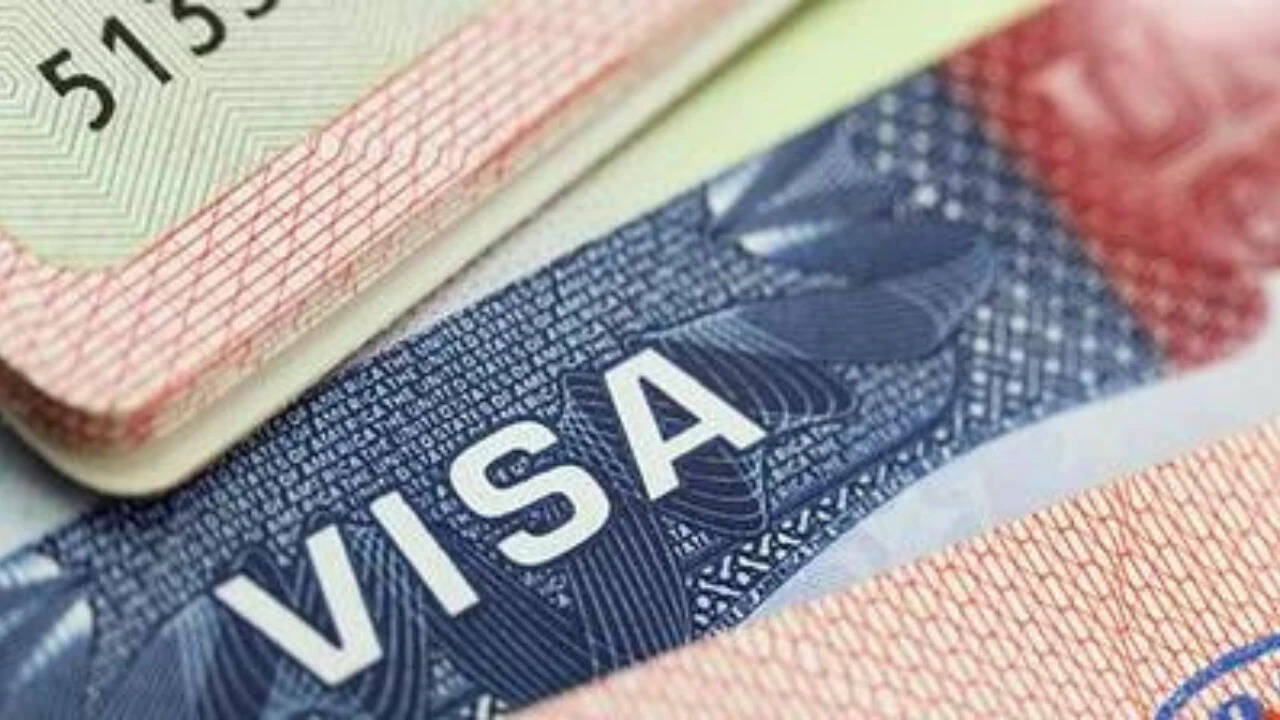
The United States is quietly expanding a pilot program that demands a cash bond of up to $15,000 from visa applicants from a specific list of countries. This isn't a mere administrative tweak. It is a fundamental shift in how the State Department evaluates the intent of foreign visitors, moving away from subjective interviews toward a cold, hard financial barrier. By targeting nations with higher rates of visa overstays, the government is essentially placing a high-stakes bet on the bank accounts of travelers. If you come for a wedding and stay to work, the U.S. Treasury keeps your money.
For decades, the "burden of proof" in a visa interview rested on the applicant’s ability to show ties to their home country—a house, a job, or a family. Now, that proof has a literal price tag. This expansion adds 12 more nations to a list that already feels like a map of geopolitical friction points. The logic is simple: if a traveler has $15,000 sitting in an escrow account, they are less likely to disappear into the underground economy of the United States. But this logic ignores the reality of wealth distribution in developing nations.
The Economics of Exclusion
The math of a $15,000 bond is devastating for an average citizen in the targeted regions. In many of these countries, that sum represents years, if not a decade, of median wages. By imposing this requirement, the State Department isn't just filtering for "risk"; it is filtering for elite status.
This creates a two-tiered system of global mobility. On one side, you have the wealthy who can afford to park five figures in a government-controlled account for the duration of a vacation. On the other, you have the middle-class professional, the student, or the family member who is effectively barred from entry despite having a clean record. The bond serves as a financial gatekeeper that replaces the nuance of consular judgment with a blunt instrument of capital.
Why Overstay Rates Are a Flawed Metric
The government justifies these measures by citing "overstay rates." When a country’s citizens exceed a 10% overstay rate for B-1 (business) or B-2 (tourism) visas, they trigger the bond requirement. However, these statistics are often skewed by small sample sizes. If only 100 people from a small nation receive visas and 11 of them stay past their departure date, that country is suddenly labeled a high-risk zone.
The data also fails to distinguish between those who intentionally "disappear" and those who face legitimate emergencies. A medical crisis or a cancelled flight can turn a law-abiding visitor into a statistical "overstay" overnight. Once a country falls into this category, the path back to "trusted" status is nearly impossible to navigate.
The Logistics of the Escrow Trap
How does one actually pay a $15,000 visa bond? It isn't as simple as swiping a credit card at the embassy. The process involves:
- Coordination with Immigration and Customs Enforcement (ICE).
- The use of certified checks or specific money orders.
- A complex refund process that can take months—or years—to resolve after the traveler returns home.
The administrative friction is a feature, not a bug. By making the process cumbersome, the government discourages all but the most determined (and wealthy) applicants. Furthermore, the risk of bureaucratic error is high. If a traveler exits the U.S. but the departure isn't properly scanned or recorded, their $15,000 remains in limbo. Proving you left the country to a skeptical federal agency from 5,000 miles away is a nightmare few are prepared to handle.
Diplomacy by Extension
These bonds are more than just immigration tools; they are levers of foreign policy. When the U.S. imposes a bond requirement on a nation, it sends a clear signal of distrust. This often leads to reciprocal measures. We are seeing a rise in "tit-for-tat" travel restrictions where American citizens suddenly find themselves facing higher fees or more stringent paperwork when trying to do business abroad.
This friction harms American business interests. When international partners cannot easily visit the U.S. for trade shows, deal-closing meetings, or technical training, they take their business elsewhere. The European Union and China are often more than happy to welcome these entrepreneurs, providing them with a path that doesn't involve a $15,000 ransom for their return.
The Rise of the Private Bond Market
Whenever the government creates a financial barrier, a private industry rises to exploit it. We are already seeing the emergence of "visa bond insurers." These companies offer to post the $15,000 for a hefty, non-refundable fee—often $1,000 to $3,000.
This creates a predatory environment. An applicant who cannot afford the bond takes out a high-interest loan or pays an insurer, adding a massive "tax" to their travel. If the traveler returns on time, they get nothing back; the insurer pockets the profit. If the traveler stays, the insurer loses the bond, but they have likely hedged their bets across hundreds of other applicants. The result is a system where private entities profit off the desperation of families wanting to reunite or students wanting to specialize.
The Security Illusion
Proponents argue that these bonds protect national security. The claim is that people who have a financial stake in returning are less likely to be involved in illicit activities. This is a thin argument. A person with genuine ill intent and sufficient funding will view $15,000 as a small operational cost. Meanwhile, the legitimate traveler is the one who suffers.
The bond does nothing to address the underlying reasons why people overstay visas. Most overstays occur because of economic opportunity or a lack of legal pathways for permanent immigration. A cash bond is a bandage on a gaping wound in the U.S. immigration system. It doesn't fix the broken bureaucracy; it just makes it more expensive.
Structural Bias in the Selection Process
The list of 12 countries isn't random. It heavily features nations in Africa, the Middle East, and parts of Southeast Asia. Critics point out that this creates a geographic and racial bias in visa issuance. While a European traveler from a Visa Waiver Program country can enter with nothing more than an online form and a small fee, a professional from an African nation must prove they are part of the global 1% just to visit a museum in D.C.
This disparity feeds into a narrative of "Fortress America," an image that the U.S. has spent decades trying to avoid through cultural exchange and public diplomacy. By putting a price on entry, the U.S. is signaling that its values are for sale, or at least, only available to those with a specific net worth.
How Travelers Can Navigate the New Rules
If you are a citizen of one of the affected nations, the strategy for obtaining a visa has changed. It is no longer enough to have a good interview.
- Liquidity is King: You must show that the $15,000 is readily available without liquidating essential assets.
- Paper Trails: Documentation of your return intent must be more rigorous than ever.
- Legal Counsel: For business travelers, having a U.S.-based entity guarantee the bond or provide legal support is becoming a necessity rather than an option.
The burden of administrative compliance has shifted entirely to the individual. The consular officer's role has transformed from an evaluator of character to a verifier of bank statements.
The Long-Term Impact on Innovation
The U.S. has long been the "brain drain" beneficiary of the world. By making it harder for talented individuals from developing nations to visit, the U.S. risks losing the next generation of innovators. Many of the most successful tech founders in Silicon Valley started as visitors on B-visas who then transitioned to work or investor visas.
If those founders had been asked for a $15,000 bond they didn't have 20 years ago, they might have taken their ideas to London, Berlin, or Singapore. The immediate "security" of a bond comes at the cost of long-term economic dynamism. We are trading future growth for a temporary reduction in a statistical overstay percentage.
Moving Beyond the Cash Barrier
There are alternatives to this blunt financial instrument. Modernizing the tracking of departures through biometric data—facial recognition at all exit points—would provide more accurate data than the current patchwork system. Strengthening the "sponsor" system, where U.S. citizens or companies take legal responsibility for a visitor, would provide a more nuanced layer of accountability than a simple cash escrow.
The $15,000 bond requirement is a symptom of a system that has given up on individualized assessment. It is a confession that the government no longer knows how to tell who will leave and who will stay, so it is asking for a security deposit instead.
As this program moves out of the pilot phase and into standard operating procedure, the map of the world will continue to be divided not just by borders, but by the ability to pay. The "invisible wall" is no longer a metaphor; it is a line item on a bank statement.
The next time you hear about a dip in international tourism or a decline in foreign students, look past the headlines and look at the cost of the ticket. For millions, the price of entry has just become a life-altering debt.
Check your country's current status on the State Department's high-overstay list before beginning your application process.