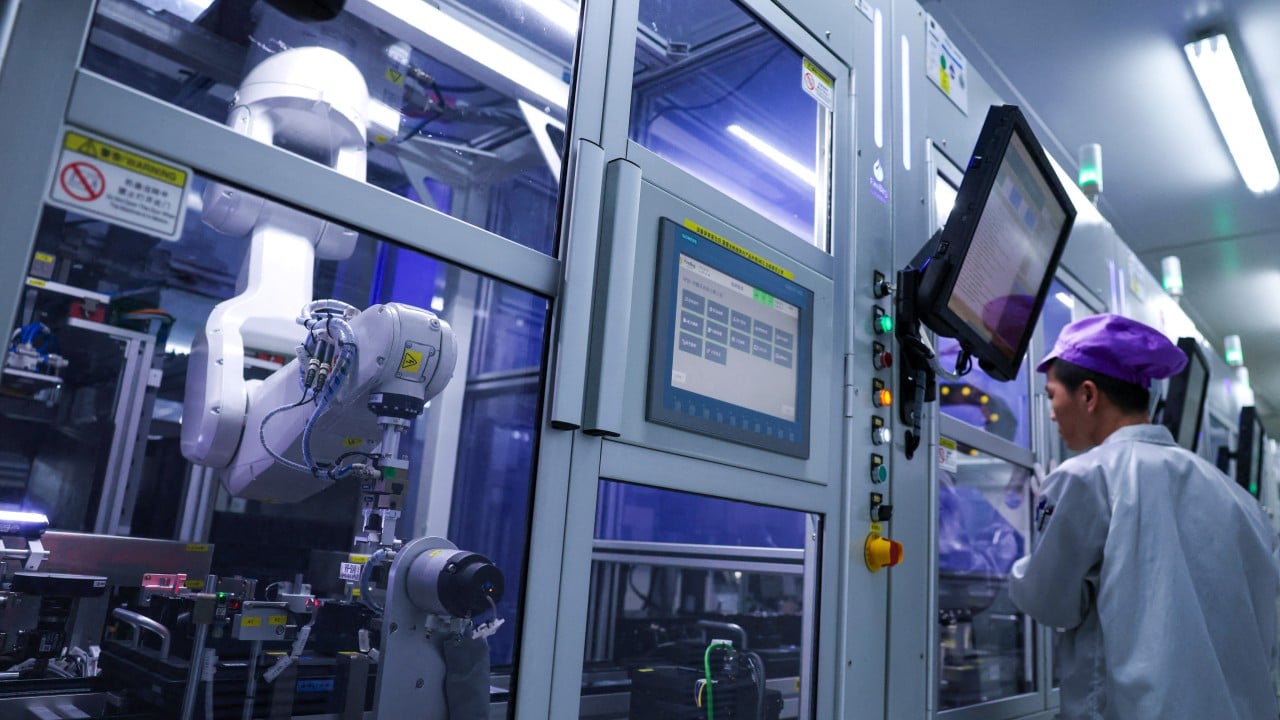
The arrival of Manus has shattered the quiet confidence of the San Francisco AI bubble. While Western giants like OpenAI and Google were busy fine-tuning chat interfaces, a startup called Monica transformed into a powerhouse by releasing a general-purpose AI agent that actually completes work rather than just talking about it. Manus represents a shift from "Chatbot" to "Do-bot," a transition that has caught the American tech sector off-guard and reignited a fierce geopolitical struggle over who controls the future of automated labor.
This is not another incremental update. Manus is an autonomous agent capable of browsing the web, managing complex research tasks, and executing multi-step workflows with minimal human oversight. In its debut, it demonstrated an ability to handle everything from financial analysis to travel planning, often outperforming the more cautious, safety-aligned models produced in the United States. The sudden visibility of this tool has turned a technical milestone into a flashpoint for the ongoing trade and technology tensions between Washington and Beijing. Meanwhile, you can read other developments here: The Anthropic Pentagon Standoff is a PR Stunt for Moral Cowards.
The Architecture of Autonomy
To understand why Manus is causing a panic in boardrooms, one has to look at how it operates compared to standard large language models. Most AI tools today function like sophisticated encyclopedias. You ask a question, and they provide a synthesized answer. Manus functions like an intern with a laptop. It does not just know things; it does things.
The core of the system is a specialized orchestration layer. This layer takes a high-level command—"Research the 2025 semiconductor market and create a spreadsheet comparing top manufacturers"—and breaks it down into sub-tasks. It opens a browser, navigates to news sites, downloads financial reports, parses data, and then populates a file. It handles the "hallucination" problem by verifying its own steps against real-world data in real-time. If it hits a paywall or a dead end, it tries a different path. This level of persistence is what separates an agent from a simple text generator. To see the complete picture, check out the recent report by Ars Technica.
The speed of this development is striking. Only a year ago, "Agentic AI" was a theoretical goal discussed at conferences. By shipping a functional product that the public can actually use, the team behind Manus has skipped the hype cycle and moved straight to utility. This creates a massive problem for American firms that have spent billions on safety research and alignment, only to find themselves potentially sidelined by a faster, leaner competitor that prioritizes execution over caution.
The Geopolitical Pressure Cooker
The timing of this release could not be more sensitive. The United States has spent the last three years tightening export controls on the high-end chips required to train these models. The logic was simple: starve the Chinese ecosystem of hardware, and their software progress would stall.
Manus proves that this logic was flawed.
Software engineers in China have become masters of optimization. Denied the unlimited compute power of a massive Nvidia H100 cluster, they have learned to do more with less. They are building smaller, more efficient models that punch far above their weight class. Manus is the result of that forced efficiency. It is a lean, highly capable engine built under the pressure of sanctions.
The reaction from the U.S. government will likely be more of the same: further restrictions. However, you cannot sanction an algorithm once it is in the wild. If Manus can perform tasks that save a company thousands of dollars in labor costs, businesses will find a way to use it, regardless of where the headquarters is located. We are seeing the birth of a "Silicon Curtain," where the world is being forced to choose between two distinct technological stacks that don't talk to each other.
Why the West is Lagging on Agents
It is easy to blame the hardware gap, but the real reason the U.S. hasn't produced a "Manus-killer" yet is cultural and legal.
Silicon Valley is currently paralyzed by two things: Safetyism and Copyright.
American AI labs are terrified of their agents doing something "offensive" or "harmful." This leads to layers of filters and guardrails that slow down the processing speed and make the agent hesitant to take initiative. When you ask a Western AI to perform a complex web task, it often returns a list of reasons why it can't or shouldn't do it. Manus doesn't have those handcuffs. It is optimized for the task, not for the approval of a safety committee.
Then there is the legal minefield. An autonomous agent that browses the web and scrapes data to complete a task is a nightmare for copyright lawyers. In the U.S., every major AI company is being sued by authors, artists, and publishers. This has created a "wait and see" approach in the legal departments of Microsoft and Google. Meanwhile, the developers of Manus are operating in an environment where the state's priority is technological dominance, not the protection of individual intellectual property rights. They have a clear runway to iterate and improve while their Western counterparts are stuck in depositions.
The Threat to Professional Services
If Manus continues to scale, the first victims won't be entry-level coders, but the massive middle-management and professional services layer.
Think about the workflow of a junior analyst at an investment bank or a paralegal at a law firm. Their day consists of gathering information, synthesizing it, and putting it into a document. This is exactly what Manus is designed to do.
The economic implications are staggering.
- Cost Efficiency: A single license for an agentic AI costs a fraction of a human salary.
- Latency: An AI agent works 24/7 without needing sleep or benefits.
- Scalability: You can deploy 1,000 agents as easily as one.
This isn't about the "future of work." It's about the present state of competition. A company using Manus to automate its market research will move ten times faster than a competitor relying on traditional methods. In the world of high-frequency business, that speed is the only thing that matters.
The Vulnerability of the Model
Despite the impressive demos, Manus is not invincible. The primary weakness of any autonomous agent is its reliance on the "openness" of the internet.
As more of these agents flood the web, websites are beginning to fight back. We are seeing a surge in sophisticated bot-detection tools and "agent-blocks" in robots.txt files. If the internet becomes a series of walled gardens that block AI scrapers, the utility of a tool like Manus drops significantly.
There is also the issue of Agentic Drift. When an AI is allowed to make its own decisions over a long sequence of steps, small errors at the beginning of the process can compound into massive failures by the end. A human needs to be "in the loop" to catch these mistakes, but the more we rely on these tools, the less likely we are to check their work. The danger isn't that the AI will rebel; it's that it will confidently provide a wrong answer that looks perfectly right.
The Race for the Operating System of Labor
We are no longer in a race for the best chatbot. We are in a race for the "Operating System of Labor."
The company—and the country—that controls the most effective AI agents will effectively control the productivity of the global economy. If a Chinese startup provides the primary tool used by global businesses to conduct research, write code, and manage logistics, the influence of the Chinese tech ecosystem will expand far beyond its borders, regardless of any hardware sanctions.
Washington's obsession with chips is an attempt to win the last war. The new war is about the application layer. Manus has shown that you don't need the most chips to build the most useful tool; you just need the most focused objective.
The silence from the major American labs following the Manus launch is telling. They are likely scrambling to remove the "safety" padding from their own models to compete. This creates a "race to the bottom" in terms of AI control, where the most aggressive and least regulated agents become the most successful.
The Immediate Impact on the Market
Investors are already shifting their focus. The "LLM-only" play is dead. Money is flowing into "Agentic Workflows."
We should expect a wave of acquisitions and copycat products in the coming months. Every major software-as-a-service (SaaS) company is now forced to ask: "If an agent like Manus can do what my software does, do I still have a business?" For many, the answer is no. This is a culling of the herd. Companies that exist merely to provide a UI for a database are obsolete. The value is now entirely in the ability to execute.
The "Manus moment" is a wake-up call for an industry that got too comfortable. It serves as a reminder that in the world of technology, being first to the research paper means nothing if you are second to the product.
You need to audit your own workflows immediately. If a task can be described in a series of logical steps, an agent will be doing it by the end of the year. The question isn't whether you will use these tools, but whether you will use the ones built in San Francisco or the ones built in Beijing. The choice you make will define the security and efficiency of your operations for the next decade.
Would you like me to analyze the specific technical benchmarks where Manus outperformed GPT-4o in recent autonomous task tests?