The sea at Riccione does not care about politics. It crashes against the Adriatic coast with the same rhythmic, indifferent thrum today as it did in 1934. It carries the scent of salt and rotting kelp, a smell that drifts through the open shutters of a house that once held the weight of a nation’s fear.
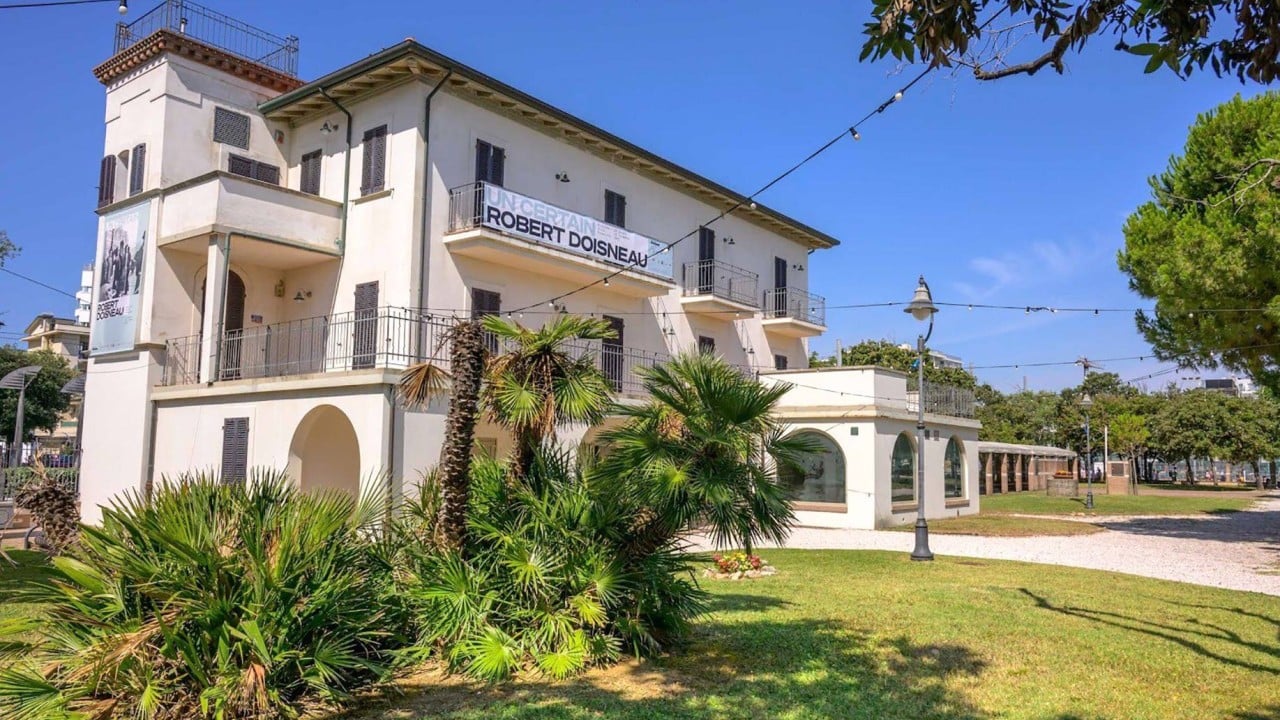
Villa Mussolini stands as a pale, architectural ghost. For decades, it was a place of whispers. Locals would walk past the perimeter, eyes fixed straight ahead, feeling the prickle of history on their necks. It was more than just a summer home; it was a stage where a dictator played the role of a family man, sun-kissed and approachable, while the gears of a fascist machine ground an entire continent toward a cliff.
Now, the gates are swinging open for a different reason. The Italian government and local curators have decided that the best way to deal with a monster’s shadow is to fill it with light. They are turning the villa into a permanent cultural space. It is a bold, perhaps uncomfortable, experiment in how a society breathes life into a corpse without accidentally resurrecting the spirit that once animated it.
The Weight of the Walls
Stepping into the villa feels like entering a vacuum. The floors are polished. The light is Mediterranean and gold. Yet, there is a thickness to the air. Consider a hypothetical visitor—let’s call her Giulia. She is a third-generation resident of Riccione. Her grandfather might have stood on the curb, cap in hand, as the black Lancia roared past. To Giulia, this isn't a museum of "content." It is a site of reckoning.
When she walks through the rooms that once served as the private sanctuary of Benito Mussolini, she isn't looking for a history lesson found in a textbook. She is looking for the stains. She is looking for the humanity that was lost in the pursuit of absolute power. The villa was where the Duce retreated to swim, to ride his horses, and to project an image of "the new Italian man." It was a propaganda factory disguised as a vacation rental.
The challenge of converting such a space is immense. If you keep it exactly as it was, you risk creating a shrine for the deluded. If you strip it bare, you erase the lesson. The curators are walking a razor's edge. They are filling these rooms with art, exhibitions, and music, effectively overwriting the dark code of the past with a new, vibrant script.
A Porch Once Crowded With Ghosts
The architecture itself tells a story of ego. The villa isn't a sprawling palace in the traditional sense. It is compact, rationalist, and imposing in its simplicity. It was designed to look modern—at least, what passed for modern in an era that rejected the old world only to build a more terrifying one.
The salt air is brutal on stone. Over the years, the villa required constant maintenance to keep the Adriatic from reclaiming it. There is a metaphor there, one that the local council likely understands well. Memory is like the sea. It erodes. It eats away at the sharp edges of the truth until everything is smooth and indistinguishable. By transforming the villa into a cultural hub, the city is essentially building a sea wall. They are saying that memory must be active, not passive.
Music will now drift from the windows where orders for censorship and expansion were once contemplated. It is a reclamation. It is an act of defiance through beauty.
The Invisible Stakes of a Summer Home
Why does it matter that a house in a beach town changes its purpose?
Because we live in an age of architectural amnesia. We tear down the uncomfortable or we board it up and hope the wood doesn't rot. But the stones of Villa Mussolini are stubborn. They refuse to disappear. In the past, the villa was a point of contention—a place where neo-fascists would occasionally gather to leave flowers, a grim pilgrimage that turned a town of sunbathers into a site of ideological mourning.
By moving the villa into the public "lifestyle" and "cultural" sphere, the state is stripping the building of its sacredness to the fringe. It becomes a tool for the many rather than a monument for the few.
The "invisible stakes" here are the souls of the younger generation. For a teenager in Riccione today, Mussolini is a name in a book or a black-and-white face in a grainy newsreel. The villa provides a physical anchor. When that teenager walks through an art gallery housed in the dictator’s former study, the power dynamic shifts. The dictator is no longer the master of the house. He is a footnote in a room full of living, breathing expression.
The Mediterranean Silence
There is a specific silence that falls over the Adriatic coast in the late afternoon. The wind dies down. The umbrellas on the beach are furled. In that silence, you can almost hear the echoes of the 1930s—the sound of a seaplane landing in the harbor, the bark of a guard, the splash of a man who thought he was a god diving into the waves.
The transition to a cultural space doesn't silence those echoes. It contextualizes them. It forces the visitor to ask: How did a culture that produced such stunning art and music also produce a period of such profound darkness?
The villa will host rotating exhibitions, some focusing on the history of the house, others on contemporary themes that have nothing to do with the Duce. This juxtaposition is the point. Life goes on. The Adriatic continues to churn. The salt continues to bite into the white paint of the shutters.
The Reconstruction of Identity
Italy has always struggled with its heritage of the "Ventennio," the twenty years of fascist rule. Unlike Germany, which underwent a more radical architectural and social purging, Italy is a palimpsest. Layers of history are rubbed out and written over, but the old ink always bleeds through.
Villa Mussolini is a prime example of this bleeding. It was bought by the town in the late 1990s, and since then, it has lived a half-life. It was a space for weddings, then a space for temporary shows, then a place that sat empty while the locals argued over what to do with it. This new move toward a permanent, structured cultural space is a sign of maturity. It is an admission that we can no longer afford to let these buildings sit in a state of "un-knowing."
We must know them. We must occupy them. We must fill them with the very things that fascism sought to control: the unpredictable, the avant-garde, and the voices of the marginalized.
The Final Guard
If you stand on the balcony today, you look out over a sea of colorful umbrellas and tourists eating gelato. The contrast is jarring. Below, children build sandcastles. Above, the ghost of a regime lingers in the doorframes.
There is a sense of vulnerability in this project. What if it fails? What if the house remains "his" house despite the art on the walls? That is a risk inherent in any encounter with history. But the alternative is far worse. The alternative is a fenced-off ruin that grows in the dark, fed by myths and half-truths.
The curators are the new guards of the villa. Their weapons aren't rifles; they are canvases and violins. They are betting on the idea that culture is more durable than charisma. They are betting that Giulia and her children will walk through these doors and feel not the weight of the past, but the possibility of the present.
The salt air will eventually claim the stone. One day, the villa might crumble back into the Adriatic sand. But until then, it serves as a reminder that even the most haunted houses can be forced to host a party for the living. The sea doesn't care who owns the porch. It only cares about the tide. And the tide, finally, has turned.