The headlines are screaming about a "blockade" of the Strait of Hormuz. Pundits are dusting off their 1970s oil crisis scripts. They want you to believe that a few naval maneuvers in the Persian Gulf will send the global economy into a permanent tailspin. They are wrong. They are remarkably, lazily wrong.
Talking about a blockade is easy. Executing one is a logistical nightmare that would likely hurt the United States and its allies far more than the targets it aims to squeeze. This isn't about "showing strength." It is about a fundamental misunderstanding of how modern energy markets and naval logistics actually function in 2026.
The Myth of the Chokepoint
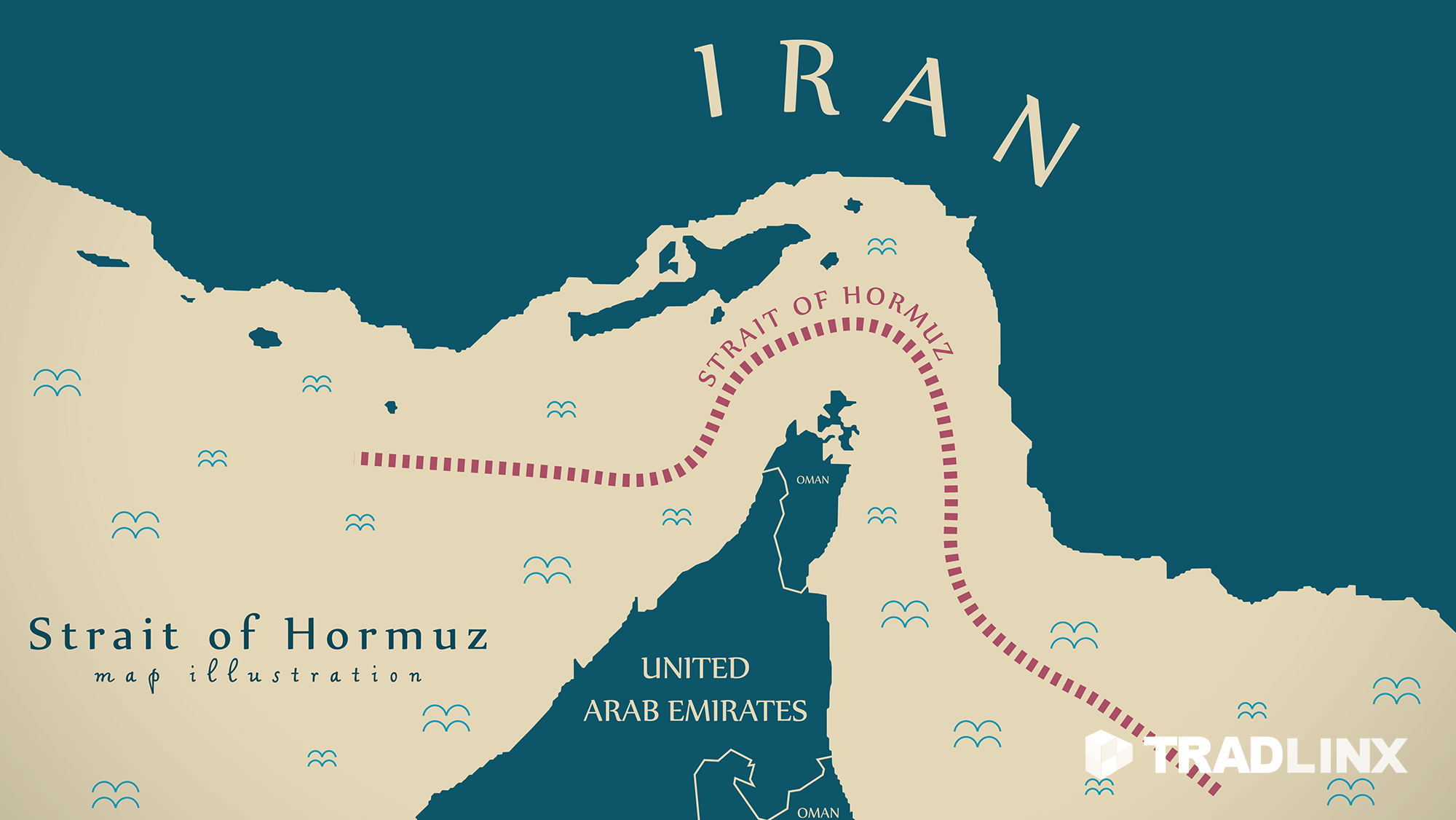
Every freshman geopolitics student learns that the Strait of Hormuz is the world's most important oil chokepoint. About 20% of the world’s liquid petroleum passes through that 21-mile-wide strip of water. The "lazy consensus" says: close the pipe, starve the world.
Here is what they won't tell you: A blockade is not a light switch. You don't just "turn off" the Strait.
To actually blockade the Strait of Hormuz, the U.S. Navy would have to physically intercept, board, or divert hundreds of massive VLCCs (Very Large Crude Carriers) every single week. These aren't speedboats. They are 300,000-ton behemoths that take miles to stop. The sheer manpower required to "police" this traffic without causing a catastrophic environmental disaster or a series of kinetic skirmishes is staggering.
I have seen planners overlook the basic math of maritime law. You cannot legally blockade international waters without a formal declaration of war, and even then, the "rules of engagement" in a crowded waterway shared by neutral parties like Oman are a legal minefield. If the U.S. starts seizing tankers, it isn't just fighting an adversary; it is declaring economic war on every nation that owns those ships—Greece, China, Japan, and Singapore.
The China Factor No One Mentions
The biggest buyer of oil passing through Hormuz isn't the United States. We are net exporters of crude. The biggest buyer is China.
If a U.S. administration blockades the Strait, they aren't just "putting pressure" on regional bad actors. They are directly cutting the throat of the Chinese economy. In the simplistic view of a cable news anchor, this sounds like a win. In reality, it is the fastest way to turn a regional spat into a global conflict.
China has spent the last decade building the "String of Pearls"—a network of ports and military assets from Djibouti to Gwadar. They aren't going to sit back and watch their energy supply get strangled by a U.S. carrier strike group. A blockade would force Beijing’s hand, potentially triggering a naval escalation in the South China Sea as a "tit-for-tat."
You don't "blockade" your way to peace. You blockade your way to a multi-theater war that the current U.S. shipbuilding industrial base is nowhere near ready to sustain. We are struggling to keep up with maintenance cycles for our current fleet; imagine trying to maintain a permanent high-alert blockade while fending off asymmetric drone swarms.
The Fracking Shield
The 1973 oil embargo worked because the U.S. was a thirsty, dependent consumer. Today, the Permian Basin is the world's swing producer.
If the Strait of Hormuz closes, oil prices spike. When oil prices spike, American shale drillers start printing money. The "threat" of a blockade actually incentivizes domestic production and accelerates the transition to alternative energy sources in Europe and Asia.
The irony is thick: a blockade intended to show American dominance would actually accelerate the de-dollarization of the oil trade. If the U.S. uses its navy to control the flow of energy, India and China will move even faster to settle trades in Yuan or Dirhams to bypass the U.S.-controlled financial and maritime infrastructure. We would be trading short-term tactical theater for long-term structural irrelevance.
The Logistics of Failure
Let’s talk about the actual mechanics. The Strait is narrow. The shipping lanes—one for inbound, one for outbound—are only two miles wide each, separated by a two-mile buffer zone.
If a single tanker is hit or scuttled in those lanes, the insurance premiums for every vessel in the region go vertical. Lloyd's of London would designate the entire Gulf a "war zone" within hours. At that point, you don't even need a blockade. The market blockades itself.
But here is the counter-intuitive part: The U.S. needs the oil to flow just as much as anyone else to maintain global price stability. A blockade is a "suicide vest" strategy. You are threatening to blow up the global economy to spite a regional rival. It is the height of strategic illiteracy.
The Asymmetric Nightmare
Anyone who thinks a blockade is a "clean" operation hasn't been paying attention to the Red Sea lately.
Non-state actors and regional powers have mastered the art of "cheap" denial. A $20,000 drone can disable a $2 billion destroyer or a $100 million tanker. To maintain a blockade, the U.S. would have to maintain 100% effectiveness against:
- Sub-surface mines that are nearly impossible to detect in high-traffic areas.
- Fast-attack swarms that can overwhelm Aegis combat systems.
- Anti-ship cruise missiles launched from mobile trucks hidden in coastal mountains.
A blockade requires the U.S. to be right every single second. The adversary only has to be lucky once. One burning tanker in the middle of the Strait shuts down the "blockade" and turns it into a massive salvage and rescue operation.
The Strategic Better Way
Instead of posturing with a blockade that we likely won't execute and cannot sustain, the focus should be on the "Overland Bypass."
Saudi Arabia and the UAE already have pipelines that can move millions of barrels of oil to the Red Sea or the Gulf of Oman, bypassing Hormuz entirely. If the goal is truly energy security, the "sharp" move isn't to park a carrier in a bathtub; it's to fund and protect the infrastructure that makes the Strait of Hormuz irrelevant.
The "People Also Ask" crowd wants to know if gas prices will hit $10 a gallon. The honest answer? Maybe for a week. Then the global recession hits, demand craters, and prices collapse. A blockade is a self-correcting disaster. It destroys the very market it seeks to control.
Stop listening to the "tough guy" rhetoric. A blockade of the Strait of Hormuz is a twentieth-century solution to a twenty-first-century reality. It is an admission that you have run out of diplomatic and economic cards to play.
You don't win by closing the Strait. You win by being the only power that can keep it open when everyone else is panicking. Power isn't the ability to stop the world; it’s the ability to keep it moving on your terms.
If you want to disrupt the status quo, stop threatening to break the global machine. Start building the one that doesn't need this specific, fragile cog to function.
The blockade isn't a strategy. It's a confession of weakness.