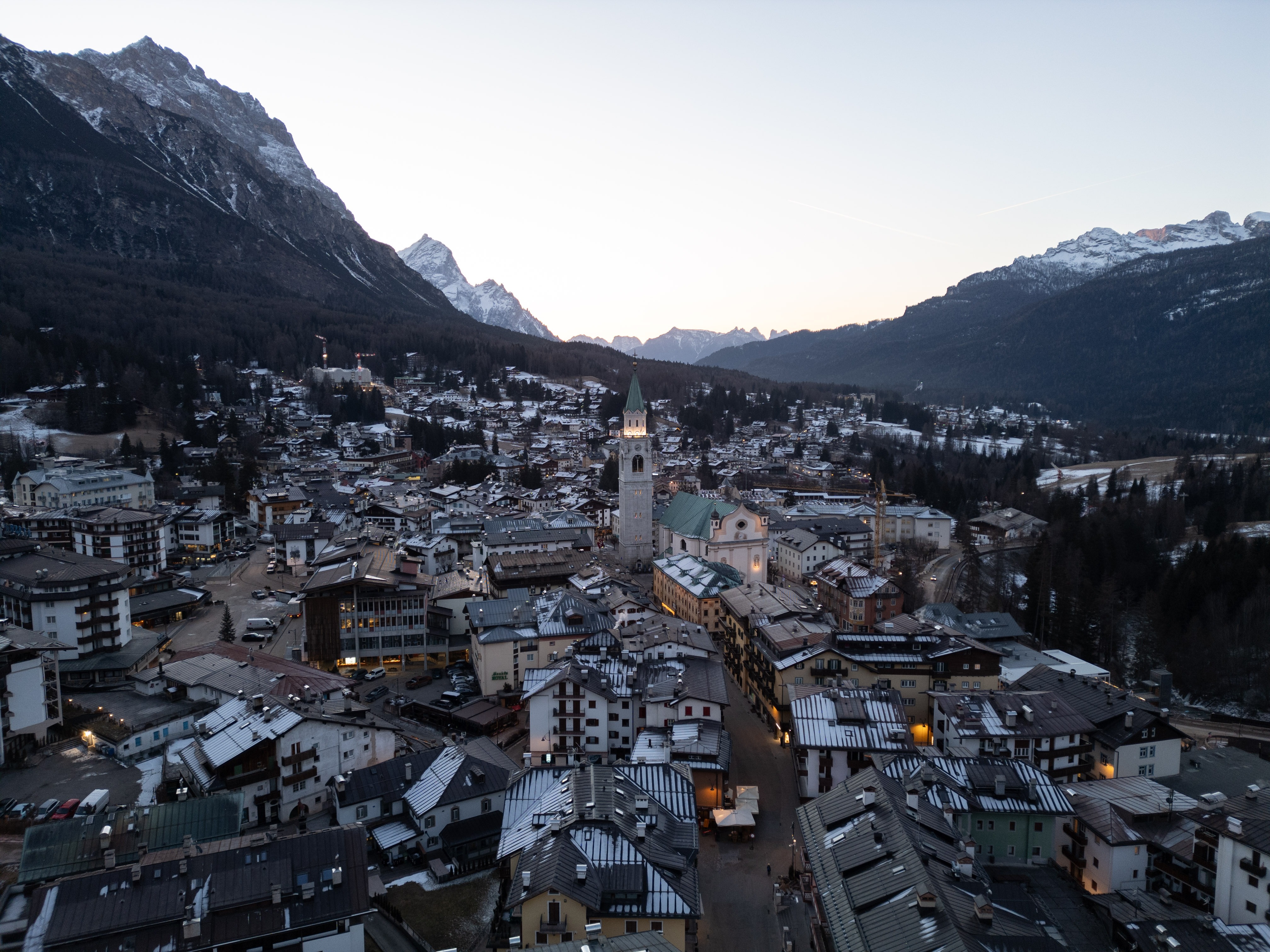
Cortina d’Ampezzo is currently a construction site disguised as a winter wonderland. While travel brochures still lean heavily on the "Queen of the Dolomites" branding, the reality on the ground is a frantic, billion-euro race against time. The 2026 Winter Olympics are not just a sporting event for this valley; they are a high-stakes stress test for an infrastructure system that was already cracking under the weight of its own prestige. The glamour remains, but it is increasingly overshadowed by the logistical and environmental costs of hosting the world’s most expensive circus.
To understand Cortina, you have to look past the fur coats on Corso Italia. This is a town of roughly 5,800 permanent residents that is being forced to expand its lungs to accommodate hundreds of thousands of visitors. The friction between its historical identity and its Olympic future has created a rift that local politics can no longer bridge.
The Infrastructure Gamble
The most glaring issue facing the valley is access. For decades, the single-lane roads winding up toward the peaks have been a bottleneck. During peak ski season, the journey from Venice can turn into a four-hour crawl. The "Olympic Plan" promised to fix this, but the fix is proving more invasive than the problem. Tunnels are being bored and bypasses are being carved into ancient limestone, yet many residents fear these roads will only serve to drain the town’s soul once the closing ceremony ends.
The cost overruns are staggering. We are seeing budgets for venues like the sliding center—intended for bobsleigh, luge, and skeleton—ballooning far beyond initial estimates. At one point, the plan was to move these events to Innsbruck, Austria, because the technical requirements for a modern track are so demanding. However, national pride intervened. The Italian government insisted on keeping the events on home soil, leading to a massive construction project in a protected alpine environment.
The Bobsleigh Controversy
Building a bobsleigh track in 2024 is an exercise in nostalgia that carries a heavy price tag. The old Eugenio Monti track, a relic of the 1956 Games, had been rotting for years. Rebuilding it requires clearing swaths of larch forest and installing massive refrigeration systems that consume immense amounts of energy. For a town that prides itself on UNESCO World Heritage status, the optics are difficult to manage.
Critics argue that the money would have been better spent on the "soft" infrastructure of the town—affordable housing for seasonal workers and the modernization of the existing lift systems. Instead, the focus remains on "hard" infrastructure that has a questionable lifespan. Most Olympic sliding centers become white elephants within a decade. Cortina is betting that its status as a premier destination will prevent this, but history is not on their side.
The Death of the Middle Class Resort
Cortina was once a place where the Italian professional class could rub shoulders with the aristocracy. That middle ground is disappearing. The "Olympic effect" has sent real estate prices into a stratosphere that even wealthy Milanese families are starting to find uncomfortable.
Real estate speculation has reached a fever pitch. Traditional chalets are being snapped up by international investment funds and converted into ultra-luxury rentals. This shift is changing the very fabric of the village. When the baker, the ski instructor, and the waiter can no longer afford to live within thirty miles of the town center, the "glamour" starts to feel hollow. It becomes a theme park for the global one percent rather than a living community.
- Housing Shortage: Local workers are being pushed further down the Boite Valley.
- Service Decline: Restaurants struggle to find staff because there is nowhere for them to sleep.
- Cultural Erosion: The Ladin culture, unique to this region, is being diluted by a generic international luxury aesthetic.
This is the hidden cost of the Olympic legacy. The Games act as a catalyst for gentrification on steroids. While the renovated hotels and shiny new gondolas look great in a PR kit, they often replace the gritty, authentic businesses that gave the town its character in the first place.
Environmental Limits and Climate Reality
There is a quiet irony in spending billions to host winter sports in a region where the snow line is visibly retreating. Cortina’s beauty is tied to its ruggedness, but that ruggedness is fragile. The Dolomites are composed of sedimentary rock that is particularly sensitive to temperature fluctuations and heavy construction.
The 2026 Games are being billed as "sustainable," a word that has lost almost all meaning in the context of major sporting events. You cannot move millions of tons of earth and pour thousands of tons of concrete in a high-altitude ecosystem and call it neutral. The energy required to maintain competition-grade ice and snow, should the weather fail to cooperate, is immense.
We are seeing a shift in how the mountains are managed. The reliance on artificial snow is no longer a backup plan; it is the primary strategy. This requires vast reservoirs of water and a power grid that can handle the surge. Cortina is currently upgrading its utilities, but the question remains: who pays for the maintenance of these systems when the tourists go home?
The Governance Gap
Investigating the flow of funds reveals a complex web of regional and national agencies. Responsibility is often fragmented, leading to delays and "emergency" funding requests that bypass standard oversight. This is a classic pattern in Italian public works, but the sheer scale of the Olympic project has amplified the lack of transparency.
Local business owners are divided. Some see the Games as the only way to modernize a town that was beginning to look a bit frayed at the edges. Others see it as a hostile takeover. The 1956 Olympics put Cortina on the map, but the 2026 Games are rewriting the map entirely.
The pressure to perform is immense. Cortina is not just representing itself; it is representing the "Made in Italy" brand. This means everything must be perfect, even if that perfection is only skin-deep. The frantic pace of work on the Tofane slopes and the construction of the Olympic Village in nearby areas show a region under extreme duress.
A Legacy of Debt or Distinction
The true measure of the 2026 Games won't be taken during the medal ceremonies. It will be taken in 2030, when the temporary structures are gone and the bills come due. Will Cortina be a more livable, accessible town, or will it be a collection of overpriced boutiques surrounding a deserted bobsleigh track?
The glamour that the competitor articles rave about is real, but it is currently a facade for an industrial-scale transformation. The Alpine legacy being built right now is one of massive engineering and even larger financial risk. To visit Cortina today is to witness a town in the middle of a radical identity crisis.
The construction cranes are now as much a part of the skyline as the jagged peaks of the Cristallo. The town is moving toward a future where "exclusive" means more than just high prices—it means a complete decoupling from the reality of the people who actually call the Dolomites home. If you want to see the old Cortina, you have the next eighteen months to do so. After that, the Queen of the Dolomites will be wearing a crown that many locals aren't sure they can afford.
The clock is ticking, the concrete is setting, and the mountains are waiting to see if they can survive the "glamour" of their own salvation.
Demand a transparent audit of the post-Games maintenance costs before the first shovel hits the ground for any "legacy" project.